Showing posts with label Doctor Who. Show all posts

10 September 2020

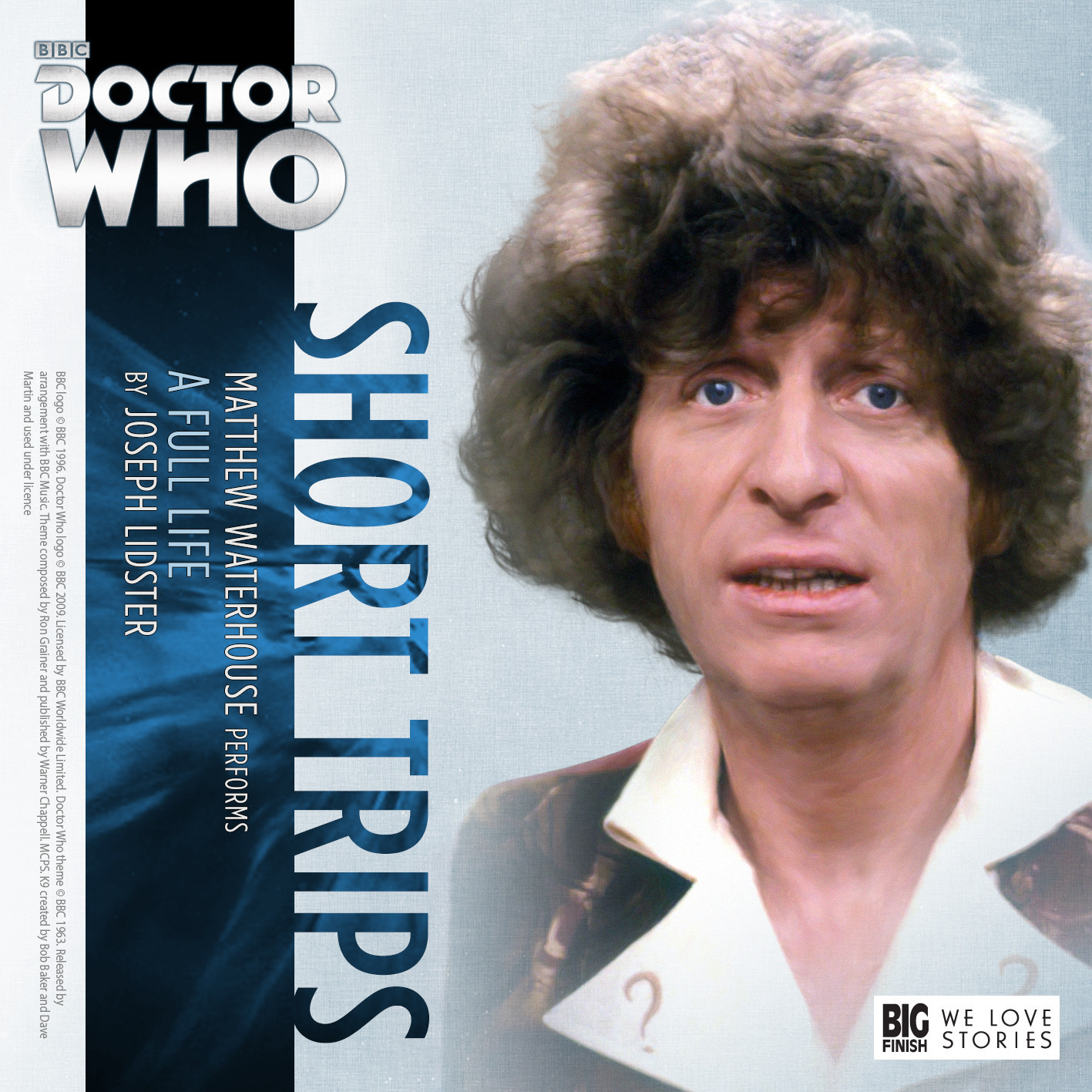
Doctor Who: A Full Life

Writer: Joseph Lidster
Director: Lisa Bowerman
Script Editor: Ian Atkins
Cover Illustration: Anthony Lamb
Music & Sound Design: Robert Harvey
Producer: Ian Atkins

Read by Matthew Waterhouse
Released September 2016
A story about a man who can't stop giving people who should be dead and long forgotten another chance at life, a chance to realise their potential, A Full Life is an apt commentary on the abilities of its writer. Following in the footsteps of some less obvious candidates for redemption - primarily Peri, Tegan and Jackie - Joseph Lidster now focuses his attentions on Adric, probably the most maligned companion the Doctor has ever had.

Nestled between State of Decay and Warriors' Gate, A Full Life looks at Adric's place alongside the fourth Doctor, the second Romana and the second K9, and how he sees it. Adric was hardly the most amiable or eloquent character during his year or so in the TARDIS back in the early eighties, but thanks to Lidster and a refreshingly self-aware performance from Matthew Waterhouse, this is easily forgotten. Over the course of 45 minutes, the pair look at each of this uneasy team, their relationships and what happens if they're split up. Of course all the toys have to go back in the box at the end but that doesn't mean Waterhouse and particularly Lidster can't have a bit of fun first.

Although released as part of the Short Trips series, this is a Companion Chronicle in all but name - and one of the strongest, too. Waterhouse narrates Adric's long tale in character and the sound effects and music combine to make this an immersive experience, particularly the last ten minutes. There's even a midpoint cliffhanger as we swap sides of the tape. This form is a canny decision from Lidster and by far the best way of telling this story, allowing the listener to be in no doubt of how Adric has matured in the decades since he stowed away in the TARDIS. The steady hand of director Lisa Bowerman ensures a complete production to compound a fullsome script. Waterhouse never misses a beat, and it's a shame to lose this take on the character so soon, but that's rather the point. A Full Life has so many staggering scenes that ricochet the plot in a new direction, yet is still unquestionably a character piece. What a rarity this is.

In going to great lengths to draw parallels between Adric and the Doctor, Lidster instead makes a convincing argument for his own inability to stop enamouring audiences with some of the franchise's less traditionally amiable characters (Master, The Reaping and Broken spring to mind). There is undoubtedly some staggering writing talent at work that transcends the usual Big Finish scale. For so many reasons, A Full Life is an incredible episode of Doctor Who.

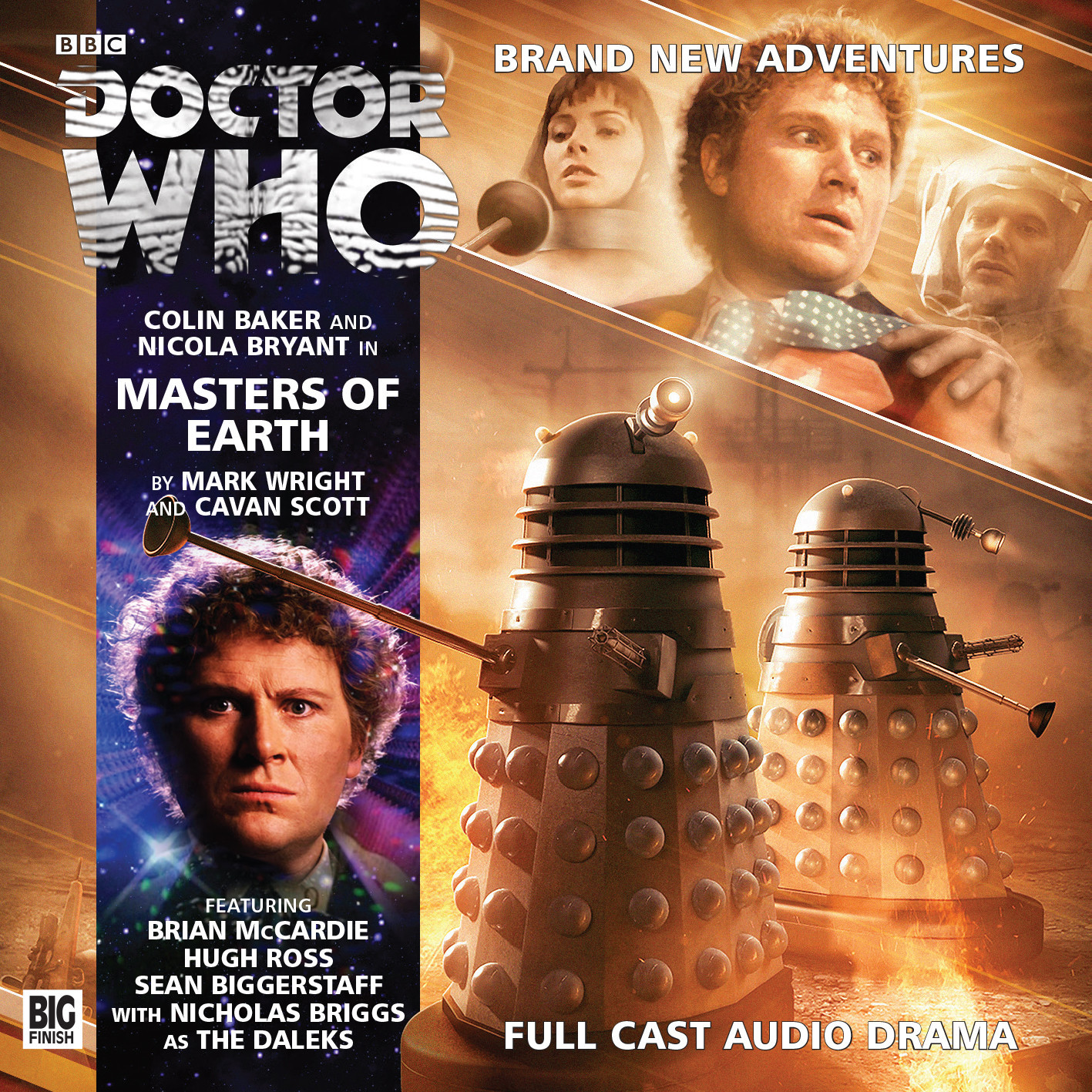
Doctor Who: Masters of Earth

Writers: Mark Wright & Cavan Scott
Director: Nicholas Briggs
Script Editor: Alan Barnes
Cover Illustration: Anthony Lamb
Music: Nicholas Briggs
Sound Design: Martin Montague
Producer: David Richardson

Starring Colin Baker & Nicola Bryant
Released October 2014

The most remarkable thing about Masters of Earth is how much of a melting pot of stock Terry Nation plots it is: obviously Daleks and another visit during their invasion of Earth, but there's duplicates, Varga plants, trans-solar discs, double-crossings galore, a secluded community with its own system of justice and a mysterious island that you have to cross dangerous waters to reach. Mark Wright and Cavan Scott embellish these with a few short-lived innovations of their own but at its heart this story is trying its hardest to be the ultimate Dalek story. Unfortunately it comes up short.


After their fractured reunion in The Widow's Assassin, the Doctor and Peri of Masters of Earth are indistinguishable from the characters at any other point in their history. There are a small number of token lines like "it's been such a long time" or "how I missed you" sprinkled throughout, but they could quite happily be cut and the rest of the story would be unaffected. It's understandable on some level: such straightforward action-adventure stories rarely dwell on luxuries such as character unless it later serves some plot function. But if that's the case, why make this the first story after they've finally found each other again? Why not change the story to fit the two central characters, rather than carrying them through a narrative they are bound not to interfere with? We've seen that it's possible to tell a Dalek story that is affecting on a personal level. Something along those lines might have had much more of an impact than this rerun of The Dalek Invasion of Earth.


The story begins, as you might expect, with the Doctor and Peri cut off from the TARDIS, meeting a subjugated community and then being carted off by the Daleks. The twist here is that they've landed at least a year before the first Doctor and co in the 1964 TV story, meaning the Doctor is bound from getting involved in case he disrupts what has already happened. Lucky it's the shy and retiring sixth Doctor on hand, not known for ruffling feathers. Pleasingly, Masters of Earth does get to the refinery much quicker than it took to reach the mine on TV, but it turns out to be completely inconsequential to the plot anyway. The bulk of the adventure is actually relatively Dalek-free, instead foregrounding their more gruesome creations - Robomen, Varga plants and Slythers - and taking place on the aforementioned island, and the journey to it.


Masters of Earth is fine scene-to-scene but completely unchallenging and almost entirely forgettable. Even the writers' invention of a higher tier of Robomen, and the reason why they are quickly dispensed with, feels a bit like clutching at straws to add yet more to an already overlong story. It's hard to believe that if Big Finish wanted an unapologetic sequel to a sixties Dalek story set entirely in Scotland nowadays, it wouldn't be Andrew Smith getting the call. And the execution is uncannily similar to how Smith might have dealt with the brief. Colin Baker and Nicola Bryant are unfazed by the shallow material and get almost exactly zero opportunities to showcase how their characters have developed in the years since they were last together. The Doctor is also more callous and closer to his Season 22 personality than we've seen in a while, taking his character in the exact opposite direction to what the listener might expect. Kyle Inskip, easily the best original character in this thanks to yet another winning performance from Hugh Ross, has his prized motorbike stolen and dumped by the Doctor after offering him refuge, and then spends the rest of the story hauling the TARDIS out the swamp. His thanks? A box of knock-off whisky that the Doctor says is foul. We can only hope the Doctor snaps out of this mood soon.


While the script is slavishly adherent to sixties conventions, the production of this story is not. The Dalek voices sound far too modern and the mechanical, electrical sound effects are a far cry from the creaks and thumps of their 1964 counterparts. I realise that since this is an audio drama more work has to be done but there must surely have been some middle ground of this. The sound design is otherwise excellent, especially for a script that demands the inclusion of so many different dialogue-free horrors. The music is another matter however. Frequently out of place, missing the point in scenes and breaking any immersion the listener might've managed to work up, its inclusion is arguably to the detriment of the story. One thing that can be said is that it is at least authentic, sometimes too authentic. I hope Roger Limb's royalties aren't too steep. A soundtrack with a sparser, more sixties feel would have been welcome but at least it's not too far a cry from what we might've got had this been on TV in the mid-eighties.


Masters of Earth is not actively bad but we've heard it all before and it's somehow still less than the sum of its well-worn parts. Shockingly for their first trip back together, you could skip this story without missing any of the Doctor/Peri storyline. This is a massive oversight on the part of the script editor and huge potential squandered. To think a story that really gets under the skin of these two characters was sacrificed for this Saturday afternoon shallow adventure tale only sours the impression Masters of Earth leaves. So what if it's Peri's first Dalek story on audio? Nothing is made of this - in fact it took quite a bit of effort to check this was actually the case. In case the listener was in any doubt there'd be another one along in a minute, Bryant has only had one trilogy since this and, oh look, there's another Dalek story. In the same way, the concept of there being disastrous consequences if the Doctor gets involved in any way goes out the window almost instantly, flattening the only real hook this story had.


Despite its incredible 140-minute length, Masters of Earth is another inconsequential set piece-based adventure narrative that goes in a big loop. Fine but far from essential.

09 September 2020

Doctor Who: Come Die With Me

Writer: Jamie Anderson
Director: Ken Bentley
Script Editor: Alan Barnes
Cover Illustration: Joseph Bell
Music & Sound Design: Steve Foxon
Producer: David Richardson

Starring Sylvester McCoy & Sophie Aldred
Released December 2015
Come Die With Me marks the halfway point of the You Are The Doctor anthology and, so far, it looks to be one of the most disposable releases yet. Jamie Anderson's story of an old-fashioned mansion in the future seems to be desperately trying to create a Night Thoughts-style atmosphere, but ends up closer to The Silurian Candidate.

The setup initially seems to be a murder mystery game organised by the skin-crawling Edwin Norris that has stumped the greatest minds from all time and space. This naturally piques the Doctor's curiosity, while Ace is pulled below stairs with the housekeeper. They learn more about the situation in tandem and eventually the Doctor must save Ace and defeat Norris. It's not especially challenging stuff, which isn't a problem in itself, but this is so chaotic it's hard to get a handle on anything and hence hard to pay attention.

There is something in Anderson's story of a murder mystery in an old house with the Sylvester McCoy Doctor that evokes stories like Master and The Magic Mousetrap. Unfortunately, that is where comparisons to these two superior releases end. Control of knowledge seems to be the 'theme' of this anthology so far, unless you count Ace having a go at flying the TARDIS, which still wouldn't be the flimsiest arc Big Finish have attempted. In Come Die With Me's climactic scene, Norris ends up giving McCoy a run for his money in the gurning and histrionics stakes, revealing that he wants to trap the minds of anyone in creation more intelligent than him in his library so that he can be the cleverest being in history. On the strength of the 20 minutes preceding this, he's going to need a bigger library.

So much care goes into crafting these stories in post-production that it seems ungrateful to criticise. There must be nightmares on so many productions that the listeners never discover because of talented sound designers managing to save them. But still, the presentation of Come Die With Me leaves a lot to be desired. This can be laid at the door of director Ken Bentley; McCoy gives a shocking performance, vamping it up like a good 'un on what appears to be his first encounter with the script. Sophie Aldred as Ace isn't much better, sounding like she got out the wrong side of bed and going massively over the top on almost every line. The sound design completely misses every open goal with regards to building atmosphere, and instead goes gives the impression of stock tracks for an am dram matinee. The music is also far too lightweight and completes the impression that the production team see this as disposable fluff, and consequently that's what they have made.

It is entirely reasonable to skip Come Die With Me without missing anything in character, plot or production terms. When people are paying £15 for this release that is inexcusable. At least You Are The Doctor was trying something different; it speaks volumes that the actor playing Norris isn't even credited.

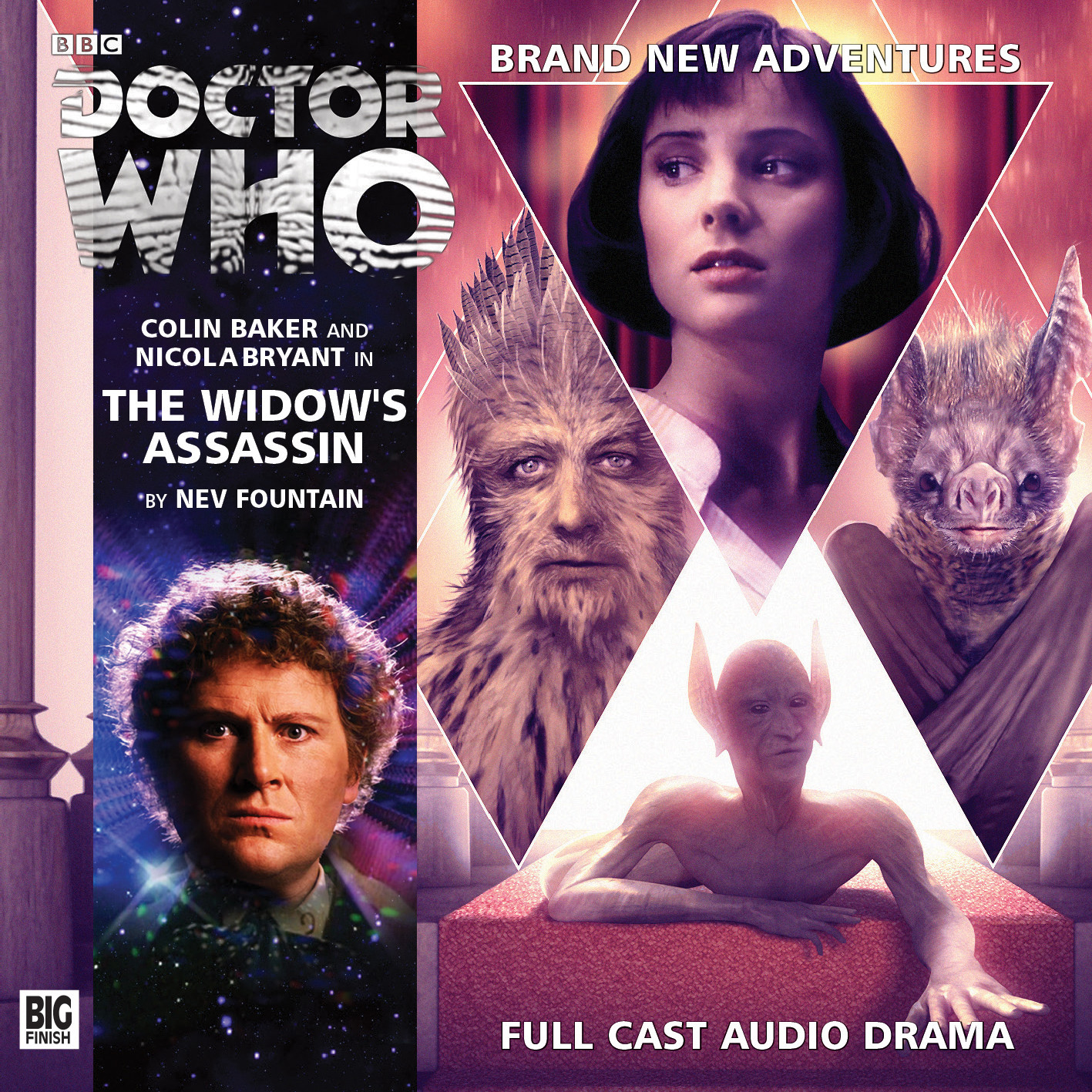
Doctor Who: The Widow's Assassin

Writer: Nev Fountain
Director: Ken Bentley
Script Editor: Alan Barnes
Cover Illustration: Anthony Lamb
Music: Howard Carter
Sound Design: Steve Foxon
Producer: David Richardson

Starring Colin Baker & Nicola Bryant
Released October 2014

The Widow's Assassin sees writer Nev Fountain at his most unpredictable, which is quite achievement. Across its four episodes, the listener is taken on a journey through a fairy tale made flesh, royal court intrigue, battles inside multiple minds and home in time for tea. That this is accomplished with such style is a credit to Fountain and director Ken Bentley.


Following the end of Scavenger, in which the sixth Doctor's latest tagalong Flip (Lisa Greenwood) departed seemingly definitively, he turns up on Krontep in search of reconciliation with Peri (Nicola Bryant), following their own fractious parting. Familiarity with the 1986 Doctor Who TV story Mindwarp benefits the listener a surprisingly great deal when listening to The Widow's Assassin. No sooner has Fountain finally married Peri and King Yrcarnos (Brian Blessed, on TV) than he's done away with him, and this is the catalyst for the rest of the story. Maybe catalyst is the wrong word, as the first episode alone is audacious enough to take place over the course of five years - and then the second goes one better and doubles it.


Setting the story over such a long period allows Fountain to establish and pay off some of the Doctor/Peri relationship work he is famed for. The irony is that, in the end, barely any time at all has passed for Peri, compared to decades for the Doctor. Ordinarily stories that concern themselves with, to paraphrase The Androids of Tara, the affairs of a piffling little planet, hold little interest. But Nev Fountain's colourful universe of characters really makes this story stand out from the crowd. Most notable is Constable Wolsey, Peri's head of security and also half-man/half-sheep. In fact, it is Wolsey who carries the story's first half, narrating events and taking the lead in the second episode. The Doctor's absence here creates a noticeable void, Fountain's writing creating questions in the listener's mind. What he has been up to is more than anyone would expect.


The Widow's Assassin skillfully walks the line between being intelligent and impregnable. Something this high-concept could have made for a difficult listen, especially at its extended length, and especially given it is such a hardcore sequel to Mindwarp. Ken Bentley, the cast and the post-production succeed in making this extremely listenable and realising the script's considerable ambition. The music in particular is to be commended for completing such a rounded production.


As a scene-setter for a new era of travels for Colin Baker and Nicola Bryant, The Widow's Assassin functions perfectly. While it is not a flawless script - the reappearance of the Doctor's first ever foe that comes to nothing is perhaps one subplot too far - the relationship of the Doctor and Peri, characters thirty years in the making is at its core and on this Fountain, Baker and Bryant never put a foot wrong. It is refreshing to have a story as genuinely witty, in writing and execution, as this and it is an absorbing listen, particularly the first two episodes. A triumph for all involved, setting the bar high and leaving the listener hungry for the next story.

06 August 2020

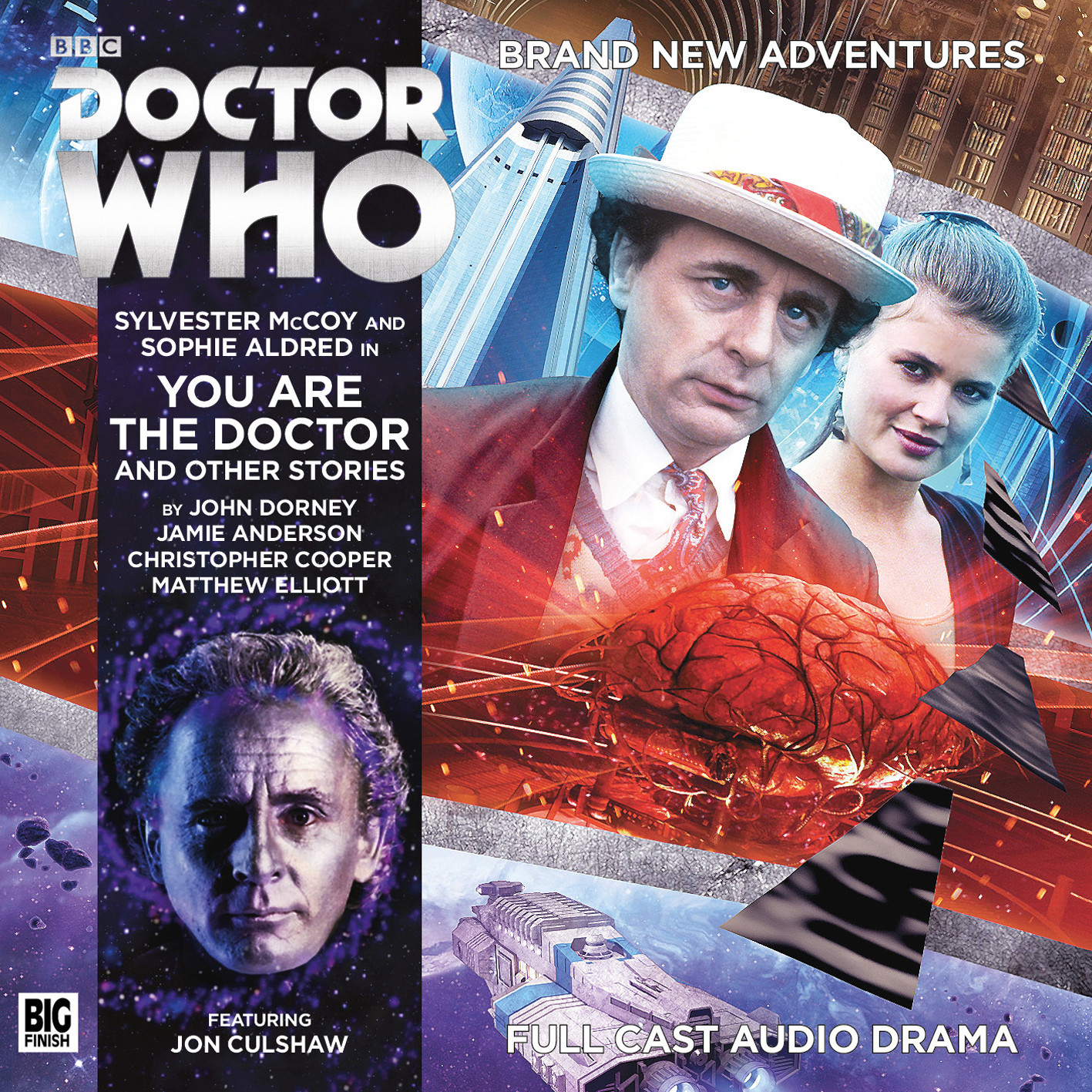
Doctor Who: You Are The Doctor

Writer: John Dorney
Director: Ken Bentley
Script Editor: Alan Barnes
Cover Illustration: Joseph Bell
Music & Sound Design: Steve Foxon
Producer: David Richardson

Starring Sylvester McCoy & Sophie Aldred
Released December 2015
Opening a quartet of stories starring Sylvester McCoy and Sophie Aldred as the seventh Doctor and Ace, You Are The Doctor is an entertaining, if not outstanding, way to fill 25 minutes. Any innovation it exhibits is in its novel presentation, the plot itself being as rote as they come. The 'decide your destiny'-style narrative and the accompanying commentary at each fork in the road are used to good effect and fill the run time well enough without pushing any boundaries.

It could be said that You Are The Doctor is somewhat obvious, but then that does seem to be the point. The pig-like Porcians return from author John Dorney's own The Fourth Wall, a full-length main range story featuring Colin Baker and Lisa Greenwood. This time it appears the Doctor's old adversary Chimbly and his wife Keith have actually, against all odds, managed to invade and take over a planet, so the Time Lord's suspicions are immediately aroused.

What follows is an inoffensive jaunt through their spaceship, punctuated by the Doctor and Ace's numerous deaths, after which the listener is instructed to return the beginning of the story. The most successful element of presenting the story in this decision-based framework is that the track numbers on the CD or in the digital album do actually correspond to the options Chimbly gives, so you could actually play along if you wanted. This is arguably unnecessary given almost all listeners will, on first pass at least, play the entire story, but this kind of attention to detail elevates the episode.

This is well-directed but it's notable how McCoy, in particular, and Aldred are able to sound so ill-prepared 30 years into playing their characters. Kim Wall returns as Chimbly and the performance suits the role though the listener could be forgiven for mistaking Wall for Nick Briggs. It really is uncanny. And try as the cast might, the Porcians still aren't as funny as the script seems to think they are. The sound design and music do a good job of setting up the narrative structure and providing extra tics to denote sections such that the listener knows what's going on before any dialogue is spoken.

You Are The Doctor was perhaps inevitable. It's pleasant enough, and sets its sights no higher than that, which is fine. While this is refreshingly unconvoluted for a Big Finish McCoy episode, we've done this story now, so hopefully the second instalment in this release will prove more substantial.

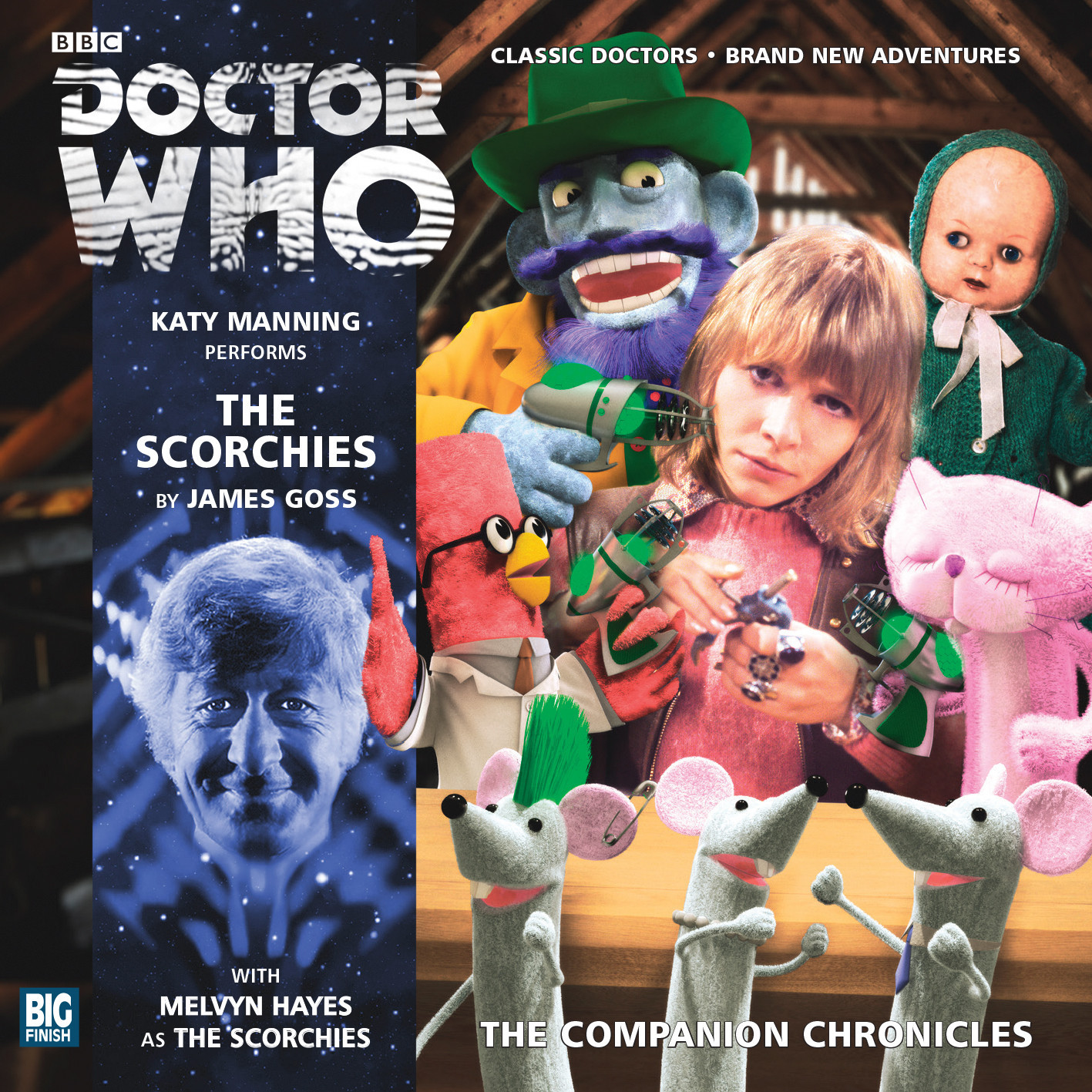
Doctor Who: The Scorchies

Writer: James Goss
Director: Ken Bentley
Script Editor: Jacqueline Rayner
Cover Illustration: Alex Mallinson
Music & Sound Design: Richard Fox & Lauren Yason
Producer: David Richardson

Starring Katy Manning
Released March 2013
The Scorchies is a masterpiece. Deliriously fun from the outset, James Goss' story of homicidal glove puppets is one of the standout Doctor Who tales from any medium. The fact that it is brought to life by just two actors, Katy Manning and Melvyn Hayes, with considerable assistance from composers and sound designers Richard Fox and Lauren Yason, only makes it more impressive.

Goss likes to skip to the interesting bits of stories, and The Scorchies is no exception, as we open on Jo Grant being introduced to the latest episode of The Scorchie Show, live in the studio. It's an attention-grabbing opening and quickly sets the tone for the colourful cast of characters that will populate next hour of the listener's life. The most memorable are the loveable Professor Baffle, who Jo ends up spending a lot of the show with, and the Magic Mice, but there's also Cool Cat and ringleader Mr Grizzfizzle. This band of animated puppets have been going from world to world with their television show, burning each planet when they're done, which is how they earned their name. Another feature of many Goss stories is one of the characters having made a mistake long ago that has led to the current situation, and here it's Professor Baffle that is to blame. Manning and Hayes do an excellent job of not only bringing the troupe to life but keeping them all distinct and recognisable.

It's hard to go much further without mentioning the musical contribution to this story. Each of the pair of episodes features two songs, performed in character as part of the narrative, and it's safe to say they fit seamlessly into the unhinged world Goss has created. Cheerful on the surface but deadly on closer examination, they are a pitch-perfect reflection of the murderous puppets. The lyrics, performance and arrangements are flawless; the story would leave much less of an impression without them. A big round of applause for Fox and Yason, whose contribution throughout raises the bar for Big Finish.

Although this features, in a roundabout way, the third Doctor, this is very much Jo Grant's story, fitting given this was released as part of the Companion Chronicles series. The Scorchies takes the technicolor psychedelia of season eight and turns it up to 11, to brilliant effect - and this is from someone who thinks the action thriller-based season seven is the pinnacle of Doctor Who's original run. Small wonder that the Scorchies have since turned up in three other series. It's testament to James Goss' abilities as a writer that he was able to turn out this and The Last Post, another astonishing (but totally different) third Doctor story, in short succession.

In short, The Scorchies is an essential listen for any Doctor Who fan with a sense of humour (narrows it down). This is a much greater, and more exciting, justification for Big Finish acquiring the license to produce Doctor Who audio dramas than seeing how the first Doctor and Susan left Gallifrey or what happened when River Song turned up a bit early for The Talons of Weng-Chiang. The Scorchies expands the Doctor Who universe and is a delightful hour of escapism that I have come back to time and again. A sparkling addition to the embarrassment of riches that are the Companion Chronicles.

27 July 2020

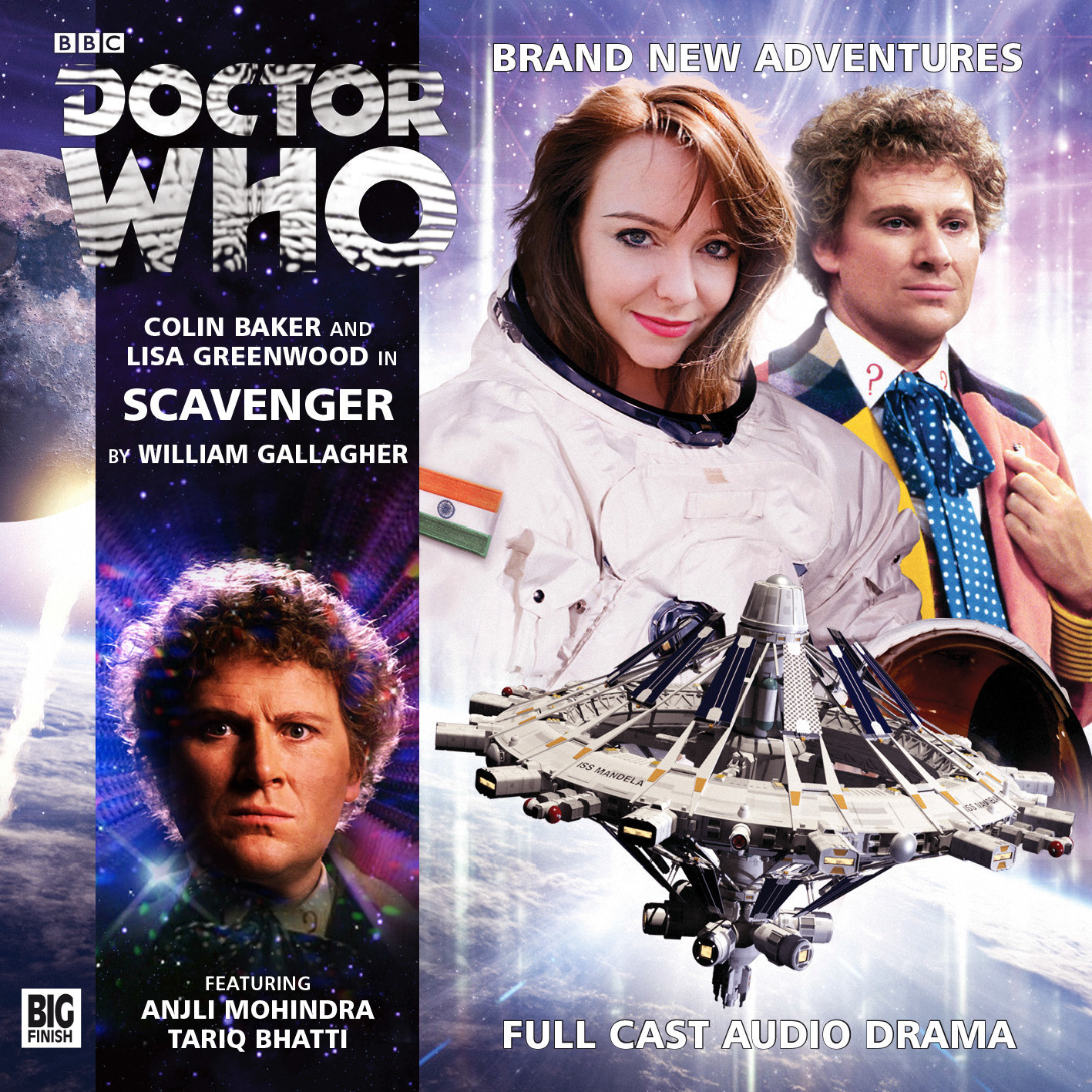
Doctor Who: Scavenger

Writer: William Gallagher
Director: Nicholas Briggs
Script Editor: Alan Barnes
Cover Illustration: Damien May
Music: Howard Carter
Sound Design: Neil Gardner
Producer: David Richardson

Starring Colin Baker & Lisa Greenwood
Released March 2014

A sense of finality hangs over Scavenger. The last in the second trilogy of releases starring Colin Baker and Lisa Greenwood, it appears to have been designed as the conclusion to a number of ongoing stories.


Principally, Scavenger foregrounds the sixth Doctor's latest accomplice Flip (Greenwood). They are separated early on, never to meet again thanks to the faith each has in the other, putting everyone else first before working their way back together. This is one of the deepest dives into Flip's character, and definitely the deepest since The Curse of Davros, her debut proper. We don't just learn about her family, but why it matters - and why it matters to her. I sense script editor Alan Barnes' guiding hand in these sections, but they are well-tempered such that they don't become an overload of information and remain relevant to the story's themes.


Scavenger is a very hardware-heavy story that begins in the near future with the launch of the Clean Up Space 2071 programme and various perspectives on it as a space craft, You Only Live Twice-style, swallows up junk lingering near Earth. This makes for an intriguing first episode and it's actually a bit of a disappointment when the titular craft shows up and the story seems to simplify with a common enemy to fight. The story also looks at the relationship between India and Britain in the near future, chiefly through the characters of mission controller Salim and obstructive bureaucrat Jessica Allaway. But India's inclusion isn't as throwaway as director Nick Briggs suggests in the interviews at the end of the story. It is embedded throughout and writer William Gallagher cleverly weaves the myth of Anarkali into the backstory of Scavenger, and uses it to drive the plot forward.


Briggs, sound designer Neil Gardner and composer Howard Carter combine to create a relentless story that, even split into four instalments, will leave you short of breath. This is well-cast, with Anjli Mohindra brilliant as Jyoti, and maintains the tension, if not always building on it, across its two hours; not an easy feat. And it seems The Widow's Assassin comes next for the sixth Doctor, a story I've been looking forward to for years.


Not unlike its namesake vessel, Scavenger demands your attention from start to finish. But it rewards in spades with easily the most competent and enjoyable story from this second Colin Baker/Lisa Greenwood trilogy. William Gallagher's sophomore story set in Earth's near future isn't as strong but his interest in the exploration of cultures and technology, and how they affect each other, remains true. A very solid script, well-realised. Can't ask for much more than that.

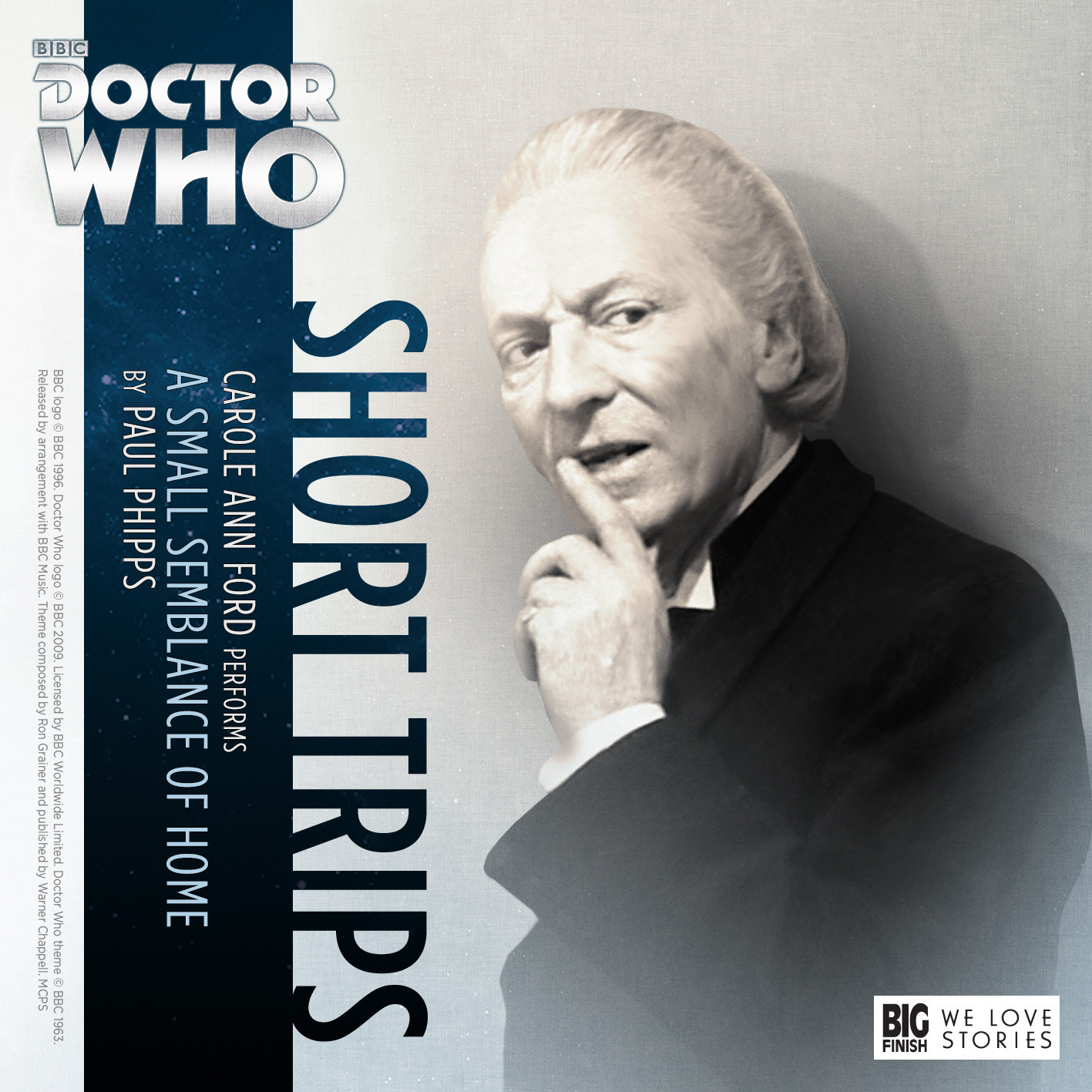
Doctor Who: A Small Semblance of Home

Writer: Paul Phipps
Director: Lisa Bowerman
Script Editor: Ian Atkins
Cover Illustration: Anthony Lamb
Music & Sound Design: David Roocroft
Producer: Ian Atkins

Read by Carole Ann Ford
Released September 2018
A Small Semblance of Home, despite the cumbersome title, is a simple story, simply told and its reach never exceeds its grasp. Designed as a tale for a lazy Sunday, in which Ian tests out a new cardy, the Doctor tries to make tea, Barbara does some adding up and Susan has a tantrum, it fulfills its ambitions perfectly well.

All that said, this forty-minute Short Trip is still more than just an interlude between adventures, with a visit to an alien planet, a bit of capture and escape and some exploration of the dynamics within the original TARDIS line-up. This is a surprisingly gentle ride from Paul Phipps, a writer more often associated with Big Finish's Dark Shadows output. While his prose does not have a particularly distinctive style, this is not a bad thing. He accurately captures each of the four lead characters and their attitudes towards one another, especially at what seems to be an early stage of their travels.

It says something about the reverence Doctor Who fans hold for established fact that even the smallest revelations about the childhood adventures of Ian, one of four leads in a 25-minute children's serial, last seen on TV 55 years ago, feel daring and as if Phipps is pushing the envelope. One unusual thing about the way this story is told is how the prose often switches between past and present tense within the same sentence. It's hard to tell if these are slips on the part of narrator Carole Ann Ford, sounding increasingly frail, or a deliberate choice of the writer.

The Short Trips series often demands a variety of skills from its sound designers and composers, but rarely has such a range been exhibited in a single story. David Roocroft, responsible for both here, uses music to great effect. From Jon Hopkins-style euphoria to tribal drums to distant strings, it's all here. The sound effects used, while serviceable enough in themselves, could perhaps have done with a little more designing, often sounding like they are one inch from the mic while being described as more remote.

In the end, A Small Semblance of Home is a pleasant, refreshingly untaxing story. A good choice for a Sunday afternoon.

18 July 2020

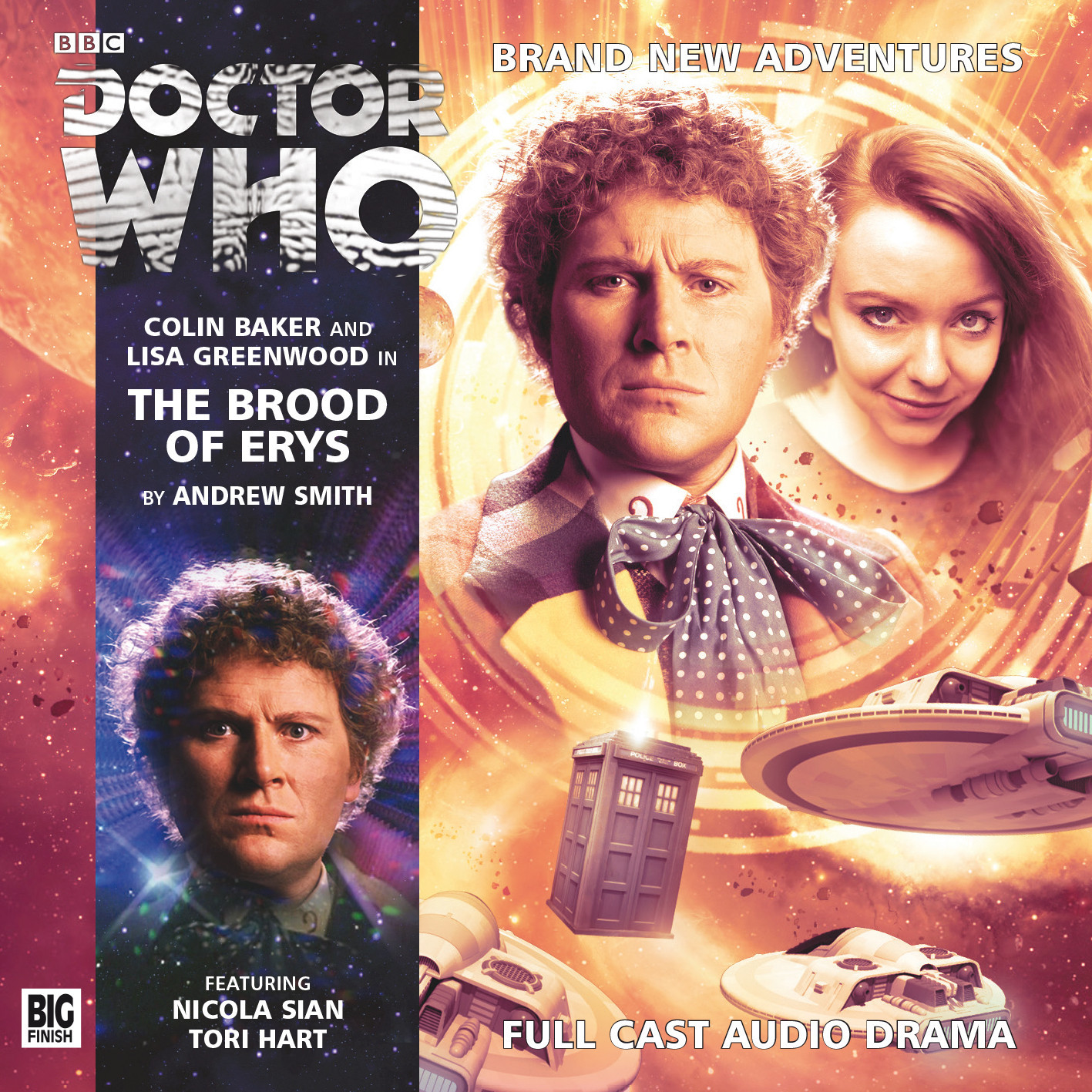
Doctor Who: The Brood of Erys

Writer: Andrew Smith
Director: Nicholas Briggs
Script Editor: Alan Barnes
Cover Illustration: Damien May
Music & Sound Design: Steve Foxon
Producer: David Richardson

Starring Colin Baker & Lisa Greenwood
Released February 2014

Big Finish's listeners are, by definition, very dedicated. Dedicated enough to seek out extra stories inspired by their favourite TV property (probably Doctor Who, let's be honest). My dedication, however, does not extend to enduring The Brood of Erys.


I had been dreading this, having first listened within a couple of years of its release, but did intend to give it another go as part of my protracted marathon of stories featuring the Sixth Doctor and Flip (Lisa Greenwood). After 25 minutes, however, I gave up. The Brood of Erys is a generic sci-fi yarn of irritating imps, babbling moons and archetypal guest characters. I am yet to be impressed, or even entertained, by an Andrew Smith script, and this fits the trend no problem.


Steve Foxon puts in a valiant effort with the sound design and music, but even casting the great Nicola Thorp in a starring role isn't enough to save this. What a waste to have two write-offs in a row for such a promising combination of Doctor and companion. Absolute rubbish.


Save your cash; life's too short.


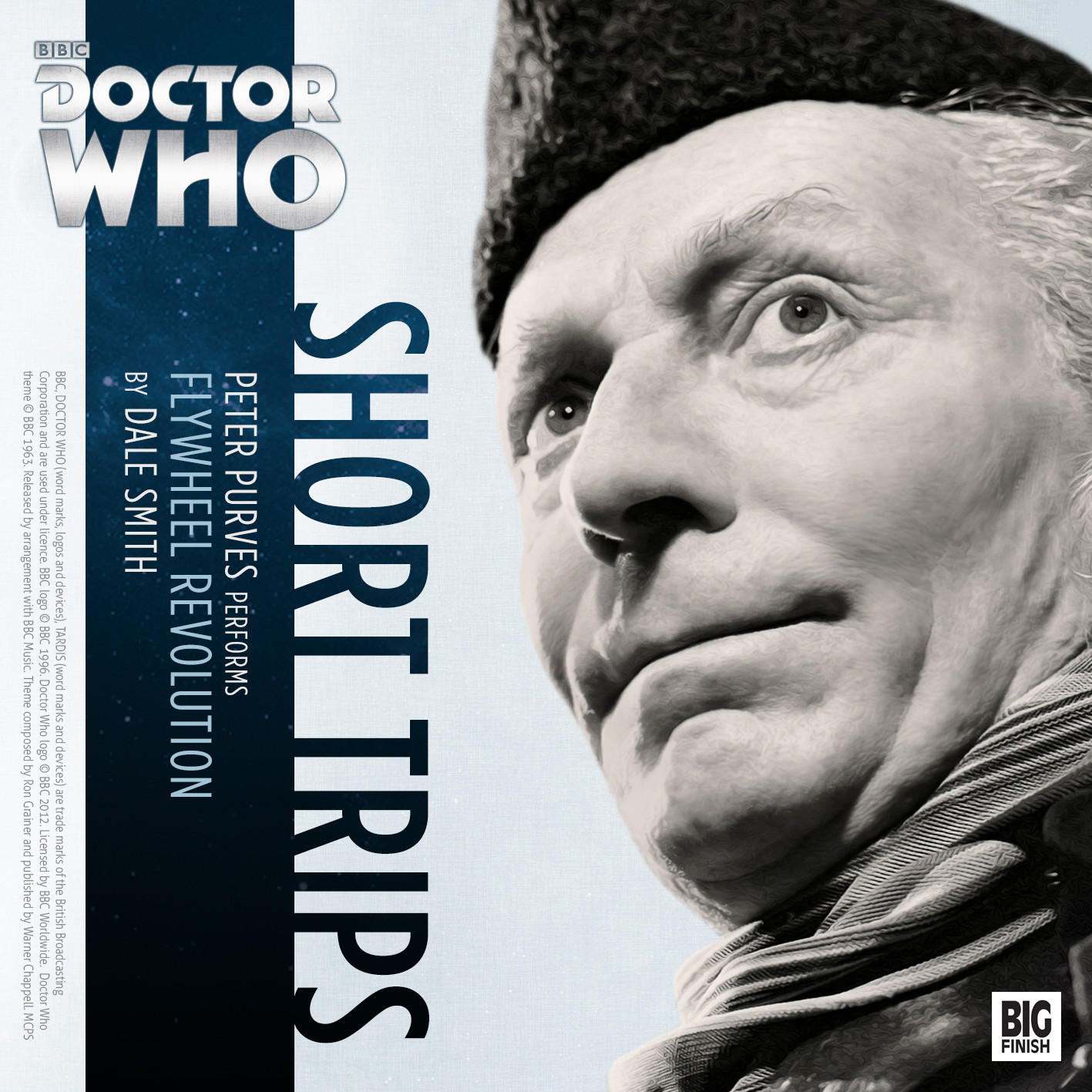
Doctor Who: Flywheel Revolution

Writer: Dale Smith
Director: Lisa Bowerman
Script Editor: Michael Stevens
Cover Illustration: Mark Plastow
Music & Sound Design: Toby Hrycek-Robinson
Producer: Michael Stevens

Read by Peter Purves
Released January 2015
The first in a series of monthly adventures that has run for six years and counting, Flywheel Revolution is charming and understated. Dale Smith's endearing tale of robots consigned to the scrapheap liberating themselves with a little help from the Doctor fits the Doctor Who Short Trips format perfectly.

The story is told from the perspective of Frankie, a robot discarded due to a minor fault with his internal clock, as he lives out his life in the confines of a scrap yard. This gives rise to a very logical style of narration, refreshingly straightforward in fact. Frankie's relationship with the Doctor, developing from the stern outsider not to be trusted to an amiable ally, condenses the softening of William Hartnell's Doctor from the TV series into just a few minutes.

Dale Smith captures the Doctor well and retains the listener's attention as first Frankie, then the Doctor explore their surroundings. This is engagingly told and, in something of a rarity for Big Finish, this is the kind of story that genuinely would fit snugly into the early years of the show. The decision to keep Susan, Ian and Barbara on the opposite side of the scrapheap's boundary wall is a wise one, allowing both Frankie and the Doctor more breathing space across this story's half-hour. Rather than feeling like a full adventure abridged for the requisite running time, Flywheel Revolution is perfectly conceived as a short story, in all senses.

Despite only appearing in a year of the TV show, most of which hasn't been seen since its original broadcast, Peter Purves is the Hartnell era's most prolific contributor at Big Finish, and this story is a good example of why. He is an excellent narrator, his measured tone ideal for audio books, and does a decent first Doctor impression to boot. Lisa Bowerman keeps the pace steady, matching the thoughtful tone of the script, and employing credible music and sound design to good effect.

Flywheel Revolution is a delightful instalment in the Short Trips series, expanding on a classic era of the show in a meaningful sense. A very promising first release that shows the level of care and attention that the stories produced by Michael Stevens typically exhibited. Recommended.

17 July 2020

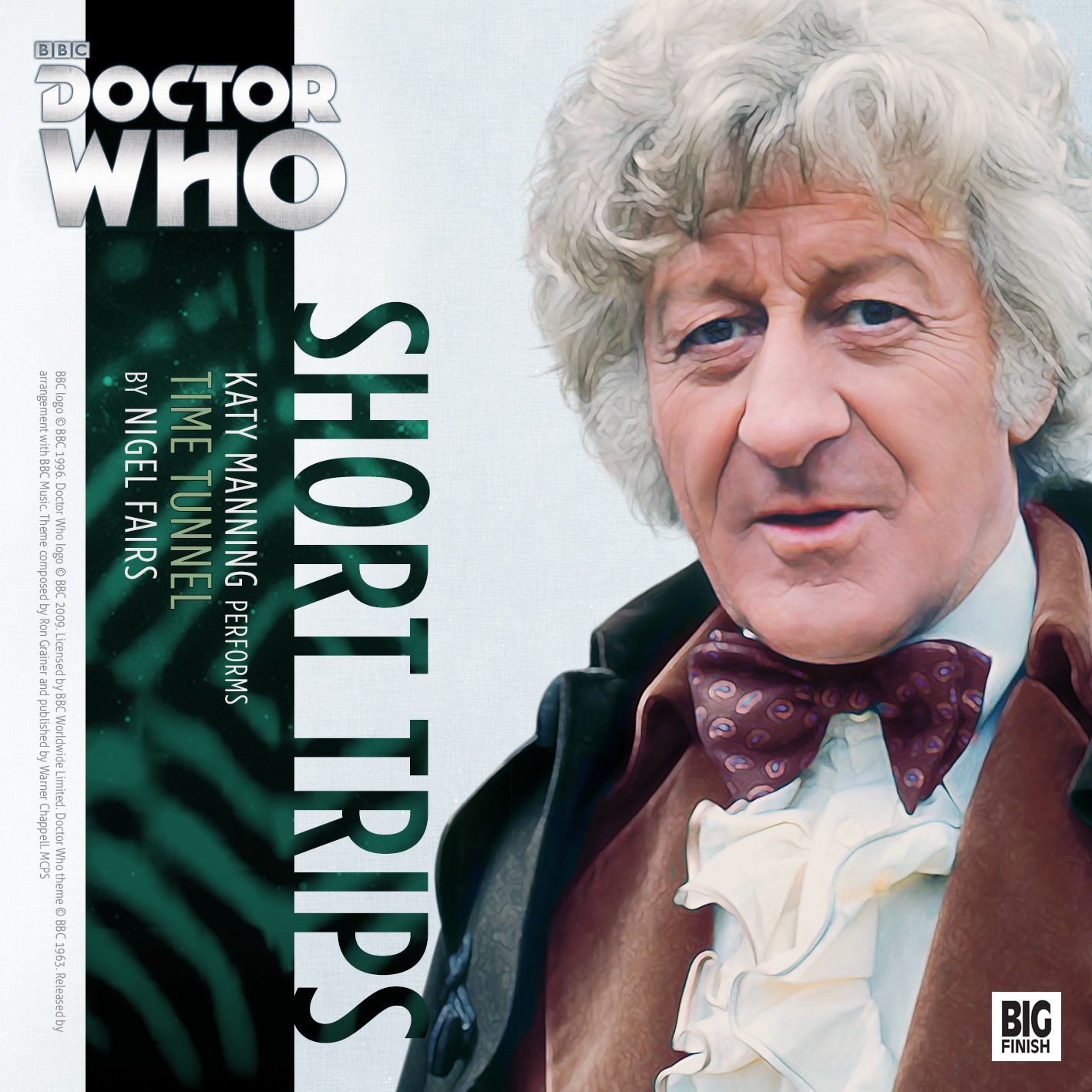
Doctor Who: Time Tunnel

Writer: Nigel Fairs
Director: Lisa Bowerman
Script Editor: Michael Stevens
Cover Illustration: Mark Plastow
Music & Sound Design: Toby Hrycek-Robinson
Producer: Michael Stevens

Read by Katy Manning
Released March 2015
The third of the monthly Doctor Who Short Trips from Big Finish Productions, Time Tunnel is a cosy offering set in the Jon Pertwee era.

The early seventies saw the third Doctor, marooned without use of his TARDIS, working alongside the 'secret' military organisation UNIT to defend the Earth from alien invasions. This encompassed almost every setup imaginable (some several times) from peace conferences under attack and replacing politicians with duplicates to underwater adventures and forays into space. About the only thing producer Barry Letts and script editor Terrance Dicks didn't try was travel by rail, something that Nigel Fairs sets about putting right.

It seems unfortunate that the plot of this story is so transparent, but in hindsight that's not the point. As soon as the Brigadier enters the Doctor's lab, interrupting yet another of his experiments, and reels off the pertinent details of the latest mystery to land on his desk, the truth seems obvious in light of this story's title. A train has emerged from a tunnel in Sussex, all its passengers and crew having died of malnutrition despite having been fine just a few minutes earlier. The joy of this story, and there is a lot of it to be found, is in the execution as the Doctor and Jo head off in pursuit of answers.

There is perhaps some mileage in contrasting Time Tunnel with The Blue Tooth, the first in the Companion Chronicles series to feature the third Doctor, just as this is his first Short Trip. Both were written by Nigel Fairs, and released eight years apart. Although the content of each is partially a consequence of which series it is supposed to herald from (the envelope-pushing Season 7 versus the comfy Season 10), they are also a neat reflection of Big Finish's development. At around the time of The Blue Tooth's release, it was not unusual to get stories like Night Thoughts, Time Works or Son of the Dragon. In contrast, 2015 offered Mistfall, The Defectors and Last of the Cybermen. Purchasing a Doctor Who story from Big Finish these days is much more of a known quantity, which is not necessarily a bad thing, but can at times make the company's creative growth feel a little stunted. The Blue Tooth is ambitious and unprecedented. Time Tunnel could not be further in the opposite direction if it had Mike Yates laying on a Jeep. But of the two, Time Tunnel is probably the stronger, so what do I know?

Katy Manning is a real asset to these audio adventures, particularly in single-voice productions, such as here. She brings her signature warmth, yet to be matched, to her reading and completes the snug impression of a story that takes in the Home Counties, UNIT setting up in a school (much better than in Primord), a buried spaceship and an alien that's not evil after all. The sound design and music don't put a foot wrong in complementing the script and performance; what a find Toby Hrycek-Robinson is.

All in all, Time Tunnel is a very enjoyable trip down the train tracks of history and another enjoyable Short Trip. The only thing I'd say is that I wish they weren't in such a blimmin rush: 7 seconds into Time Tunnel, we've had the theme tune, Katy Manning's voiceover introduction and we're into the story itself. That aside, this is turning into a great series that could easily fly under the radar. Don't miss out.

14 July 2020

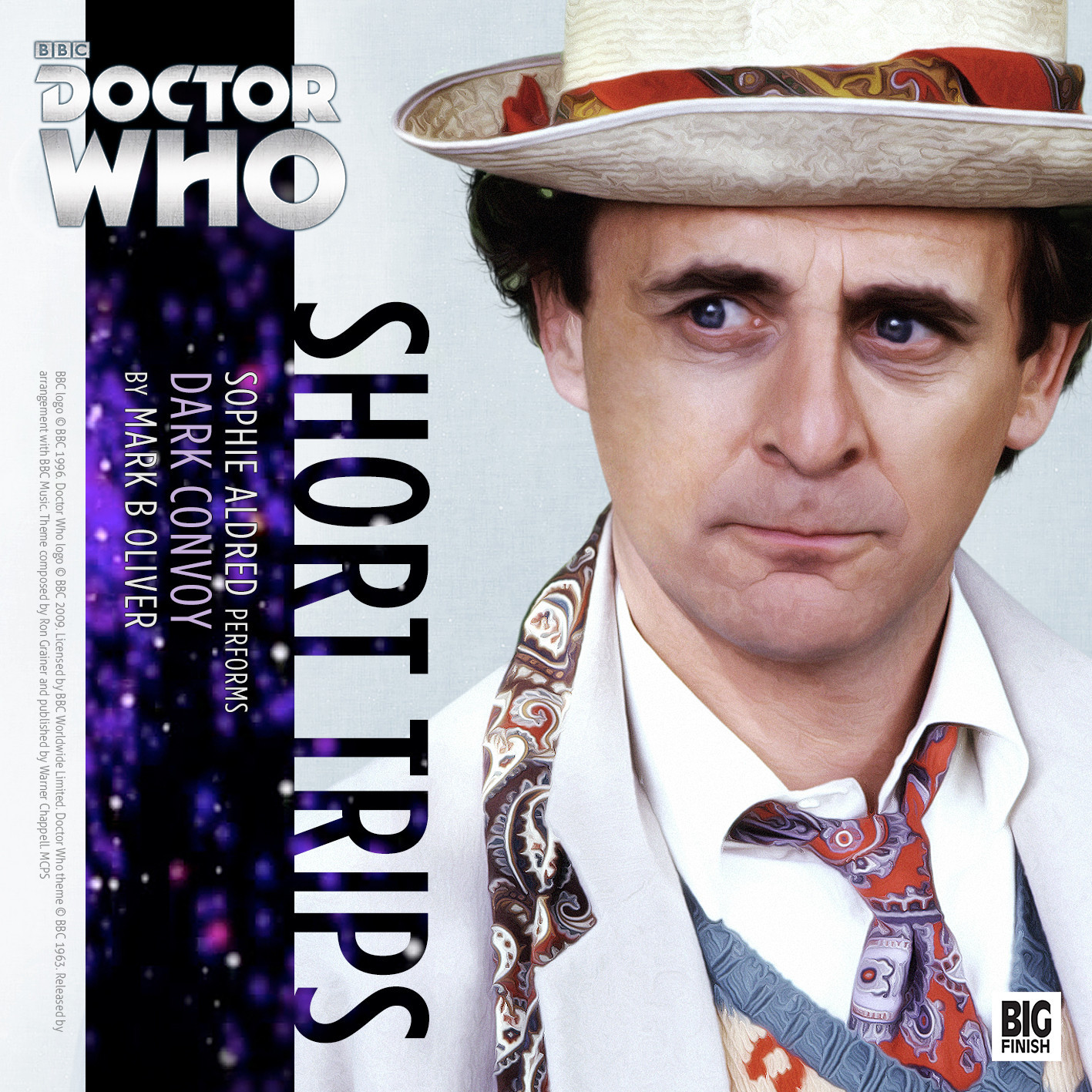
Doctor Who: Dark Convoy

Writer: Mark B Oliver
Director: Lisa Bowerman
Script Editor: Michael Stevens
Cover Illustration: Mark Plastow
Music & Sound Design: Toby Hrycek-Robinson
Producer: Michael Stevens

Read by Sophie Aldred
Released July 2015
Stories set during the Second World War are tenapenny in Doctor Who, and not exactly unfamiliar to the seventh Doctor and Ace, so to break new ground on both counts is something of an achievement. Dark Convoy sees the TARDIS landing on a British warship in the Arctic circle, its occupants quickly becoming embroiled in a moral dilemma.

As is traditional, the Doctor and Ace soon become separated, and the latter ends up heading out into open waters in a rowing boat to rescue survivors of a sunken vessel with the former remains at the Captain's side, nudging the bigger picture in the right direction. This is a succinct portrait of each's natural habitat but writer Mark B Oliver never makes a point of it, suggesting an affinity for these characters.

The prose is supple and leads the listener through a variety of well-researched locations. It is occasionally over-earnest, bombarding the audience with names of every soldier going and cutting narrative corners to signpost which archetype they might fit, but on the whole this is a compellingly written Short Trip from Big Finish Productions. The Doctor and Ace, as previously mentioned, are well-captured, Dark Convoy winning this listener back round on the Sylvester McCoy incarnation after Project: Destiny was so comprehensively off-putting that it has taken several months to listen to any of his stories.

The music and sound design are expertly woven into the story, thanks to strong direction from Lisa Bowerman, with the score being especially accomplished. The foley chosen usually works well but a couple of scenes stand out; for example, a commotion in the mess following a call to action stations sounds more like someone gradually packing away chairs in a village hall. Sophie Aldred's reading is good enough, capturing the Season 25 spirit of Ace and the Doctor particularly well.

Much better than I remembered, Dark Convoy is definitely one of the stronger Short Trips, which seem to be quite firmly good or bad, without much middle ground. Within the space of a year, Mark B Oliver wrote one of the strongest Iris Wildthyme episodes, Dark Convoy, two Confessions of Dorian Gray, and hasn't been heard of since. I do wonder what happened because on the strength of this, he had a lot more to offer. Dark Convoy won't set your world alight but it's a compelling way to spend an immersive half-hour.

06 July 2020

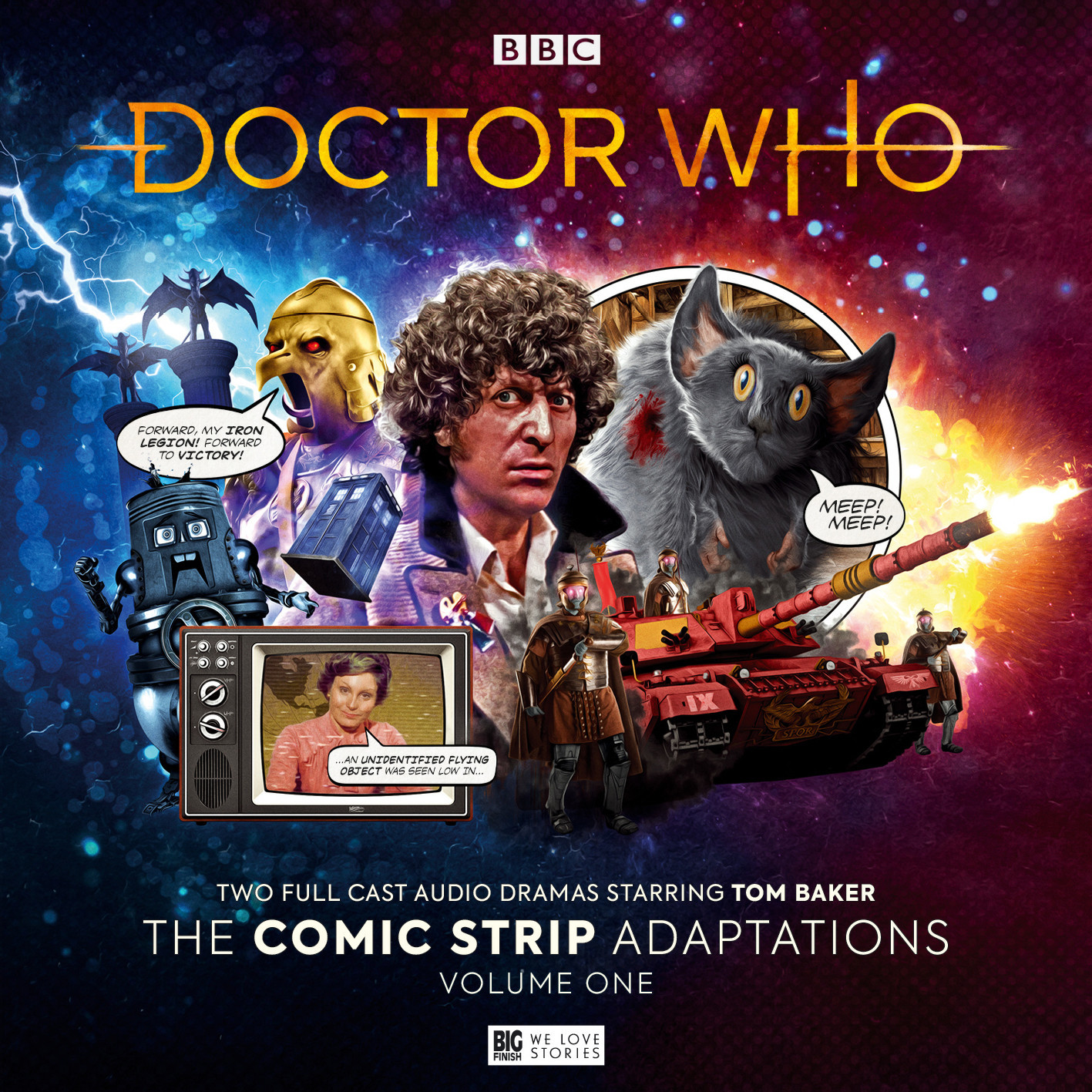
Doctor Who: The Iron Legion

Adapted by: Alan Barnes
Director: Nicholas Briggs
Script Editor: Nicholas Briggs
Cover Illustration: Will Brooks
Music & Sound Design: Alistair Lock
Producer: Jamie Anderson

Starring Tom Baker
Released March 2019
The first half of a prestige set taking comic strips published in Doctor Who Weekly's fledgling issues and turning them into full-cast audio dramas, The Iron Legion is something of a disappointment. In the year or so since its release, this story has received a swathe of glowing reviews so discovering it was quite so lacking was something of a surprise.

The basic premise is that an army of robot Roman legionaries has invaded the town of Stockbridge and after swiftly sending them packing, the Doctor follows them back through time - and, as it turns out, space. The bulk of the story takes place in Rome, 79AD, but in a parallel dimension where the empire is ruled over by a boy and aliens and robots are a fact of life. Setting The Iron Legion almost entirely in another dimension rids it of some of its mystery, as the clashing iconography is purely for its own sake, rather than there being an internal reason for interference in history. This is not exactly the end of the world, just unexpected.

The four episodes are essentially a jaunt from one outlandish character or set piece to another, and while it is a well-realised production, with a very consistent tone and strong performances (particularly Esther Hall and Joseph Kloska), the material itself is relatively unengaging. Pitched - and, to be fair, received - as a highly witty tale, The Iron Legion did seem to be wanting. The original strips were the very first published in Doctor Who Weekly in autumn 1979, spanning the broadcast of City of Death, The Creature from the Pit and Nightmare of Eden. Big Finish have experimented with the reputed Season 17 tone of wit and whimsy before, most notably with their adaptations of Gareth Roberts' nineties Missing Adventures novels (including the superb The Romance of Crime). The Iron Legion is not a patch on past efforts, although there were some aspects and additions that were very much appreciated, such as the fourth wall-breaking sound effects as we explore the Doctor's mind.

To adapter Alan Barnes' credit, as someone unfamiliar with the original story, it is hard to tell where the comic strip ends and the new material begins. But overall, this was not a particularly enjoyable experience and after the first episode, this set of eight felt like a waste of money. The story did improve, and is carried by a broad performance from Tom Baker, but ultimately it inspires no urgency to listen to The Star Beast, the other story of the set.

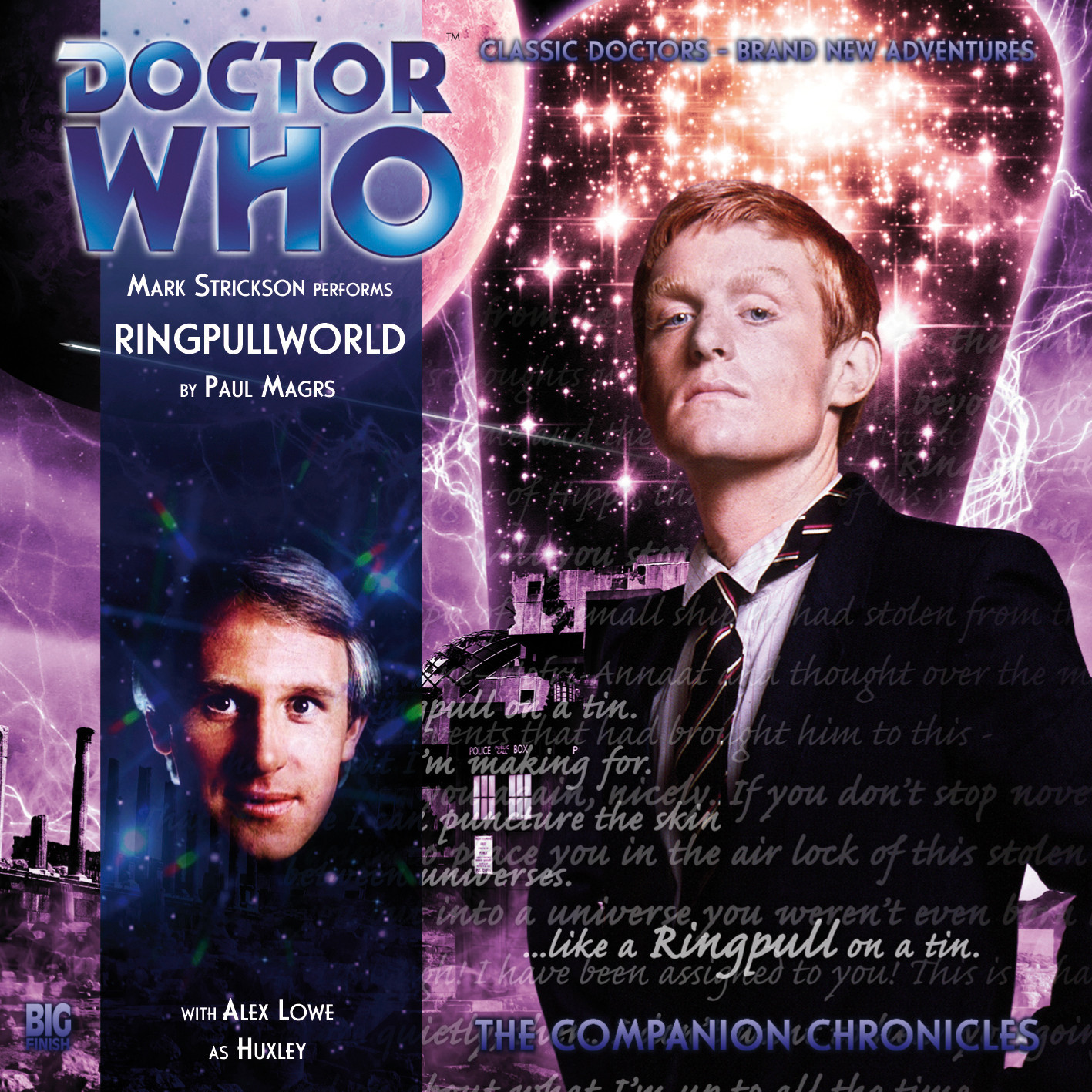
Doctor Who: Ringpullworld

Writer: Paul Magrs
Director: Neil Roberts
Script Editor: Jacqueline Rayner
Cover Illustration: Iain Robertson
Music & Sound Design: Daniel Brett
Producer: David Richardson

Starring Mark Strickson
Released November 2009
Paul Magrs isn't one to deliver a predictable script. One of only three Doctor Who Companion Chronicles from Big Finish Productions to feature the fifth Doctor, Ringpullworld is unusual on that basis alone. But the construction of Magrs' story, going beyond 'narrative devices', serves to part further from the field.

There are two main ideas at work here. The first is the Novelisers, a race who shadow individuals and record their every word, action and even thought - for a fee, naturally. The Doctor, Tegan and Turlough have somehow got themselves tangled up with the Novelisers and have a trio in tow as they arrive at the story's other, more abstract, concept: an entire universe in what appears to be a tin can.

While these are entertaining images themselves, their execution and the combination of them are where this story's interest really lies. The first episode begins with Turlough piloting a stolen ship out of the tin can universe, which would free the race it serves to imprison for their violent nature, his Noveliser, Huxley, along for the ride. This first installment fills in some backstory as the ship grows closer to the Ringpull; the way out. The second advances the listener in time once more and focuses on the future tense. This distinction means that neither episode really goes into the current situation in much detail, but that is the point as Turlough and Huxley bicker over their accounts of events. This is more a story about reaction than action; more about perception than inception.

Mark Strickson and Alex Lowe bring these high-concept notions to life with vigour. Strickson is always good value for money and series like the Companion Chronicles or the Short Trips really give him space to shine. It's staggering that, over 20 years in, Big Finish have only produced one full-cast audio with the line-up of the fifth Doctor, Tegan and Turlough, and even that was a story conceived for their stint on TV.

Ringpullworld introduces some big ideas and explores them ably, assisted by strong sound design and music from Daniel Brett. It is an entertaining way to pass an hour and you could do a lot worse than picking this up next time it's on offer.

02 July 2020

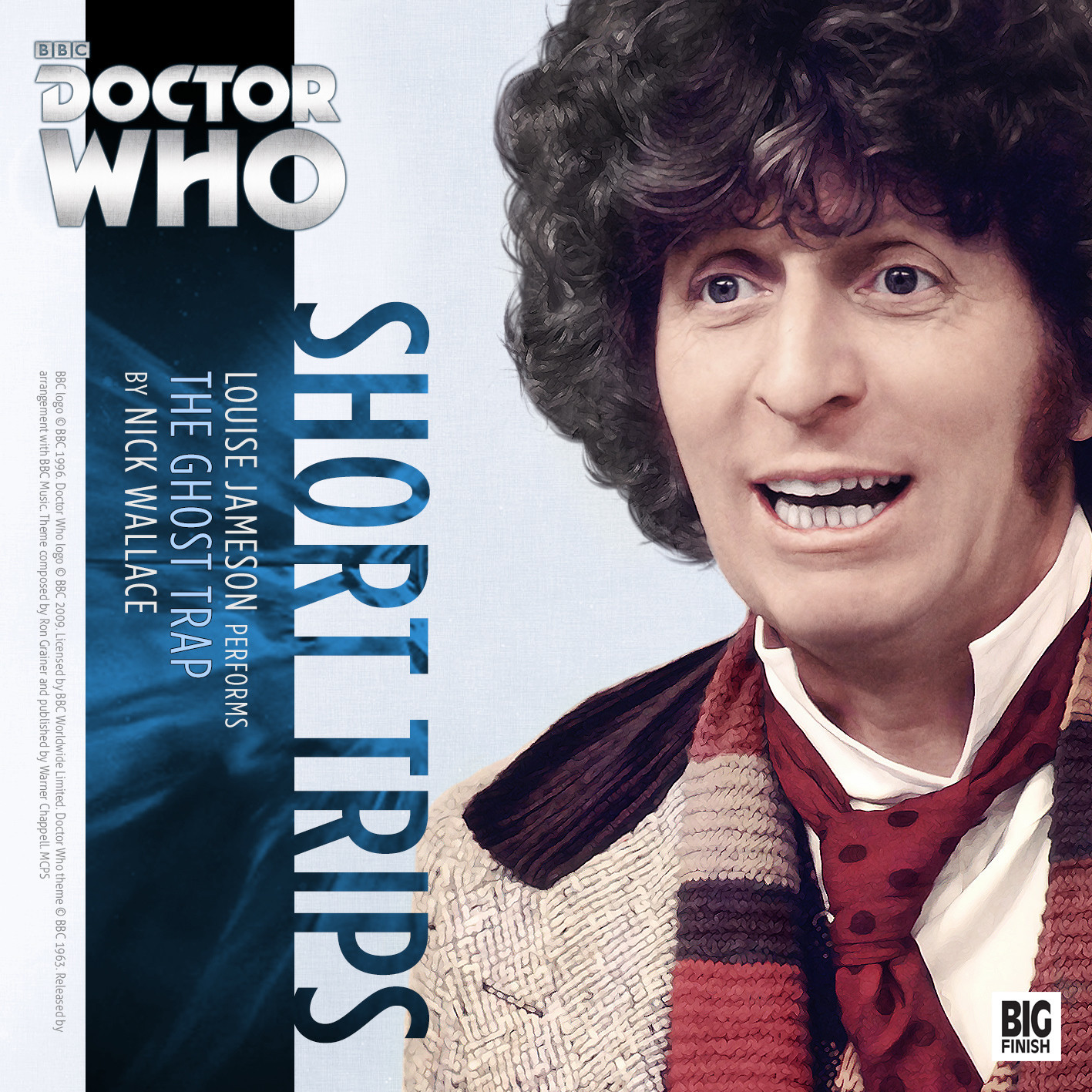
Doctor Who: The Ghost Trap

Writer: Nick Wallace
Director: Lisa Bowerman
Script Editor: Michael Stevens
Cover Illustration: Mark Plastow
Music & Sound Design: Toby Hrycek-Robinson
Producer: Michael Stevens

Read by Louise Jameson
Released April 2015
The first fourth Doctor instalment of the new-format monthly Doctor Who Short Trips, The Ghost Trap is a decent summation of the era's middle years without ever threatening to be particularly attention-grabbing.

Landing on an organic ship ripped out of hyperspace, the Doctor and Leela explore, get into a few scrapes and head off again. They are pretty much the only two characters, but spend most of the story apart, leaving little room to delve any deeper into their relationship.

Nick Wallace's script is thoughtful and atmospheric and the production reflects that, although the music could do with being slightly more dynamic at times to keep up. This is a pleasant way to spend half an hour but won't linger in the mind very long after it's finished.

Louise Jameson gives a good reading, but it's pretty stock material for both Leela and the Doctor. That's no bad thing; The Ghost Trap is harmless enough, it just feels like the first and third episodes of a traditional four-parter bolted together and condensed, without much else to it.

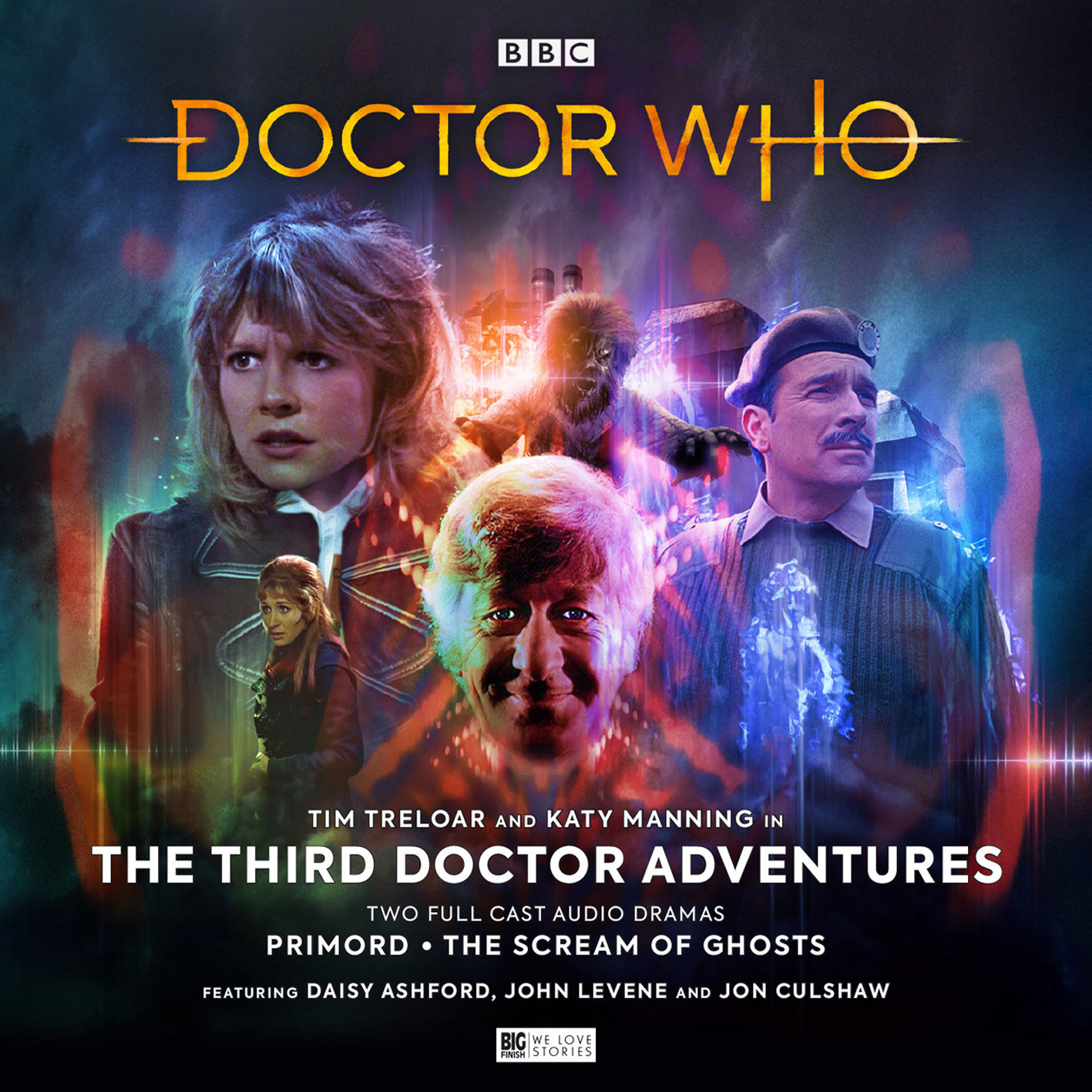
Doctor Who: Primord

Writer: John Dorney
Director: Nicholas Briggs
Script Editor: Guy Adams
Cover Illustration: Tom Webster
Music: Nicholas Briggs
Sound Design: Lee Adams & Joe Meiners
Producer: David Richardson

Starring Tim Treloar, Katy Manning, Jon Culshaw & Daisy Ashford
Released May 2019
The ninth in Big Finish Productions' string of full-cast original audio dramas set in the third Doctor's era, Primord is all about looking backwards.

The four-episode story is an unashamed sequel to the 1970 classic Inferno, but unfortunately sets its sights no higher than that. The basic plot stems from an army General, Sharp, thinking he knows what is best for Britain and weaponising the primordial slime collected from the Stahlman project. So how does the Doctor come to be involved? Taking up an invite from Liz Shaw, now a Professor at Cambridge, he and Jo decide to take a well-earned weekend off. Coincidentally, the Brigadier (sans UNIT) is off to investigate reports of escaped prisoners in the same area in lieu of there being any alien invasions to fend off.

With all the pieces in place, the story kicks into gear as we learn how Liz has been helping General Sharp increase the effectiveness of the Stahlman liquid as a biological agent and military weapon. The Doctor obviously makes it plain that he is dead against this - until he is infected too.

So can do I justify the idea that Primord is all about looking to the past? Only a quarter of the principal cast actually featured in the third Doctor's era on TV for starters. But it goes deeper than that. As already mentioned, the story is ostensibly an out-and-out sequel, reassembling the same characters - plus Jo - and centering around an element of the original - in this case, the Primords. But even the General and his ally in the Cabinet essentially want to restore the empire, and Liz can't let go of what happened to her fiance. Plus the plan of using 'alien' creatures to wander into enemy territory for military advantage, but having to keep them under special isolated conditions to control them is almost beat-for-beat Carrington's strategy from The Ambassadors of Death.

Recasting characters is nothing new, even for Big Finish, and it's not necessarily a problem in itself, but headlining a story with an actor that occasionally sounds like Jon Pertwee, an actor that doesn't really sound like Nicholas Courtney and an actor that doesn't really sound like Caroline John gives it a different feel. Tim Treloar, an excellent actor in his own right, is an old hand at his third Doctor impression now but seems to be going off the boil slightly compared to his near-faultless performances closer to the start of this series. Daisy Ashford, daughter of Caroline John and Geoffrey Beevers, and Jon Culshaw are perfectly passable and capture the spirit of their characters but at no point does this feel like a story from the early seventies. Katy Manning also overdoes trying to sound younger but settles into the role over Primord's two hours.

Unusually for Doctor Who, the strongest episodes are probably the middle pair, with the first leaving a bad taste in the mouth, the way it is directed feeling more like taking the mick out of a creaky old kids show than an affectionate homage, and the last negating characters' identities to play Liz off as the Brigadier's opposite number. Their chat while their respective armies tear chunks out of each other does little to impress. It may just be because it's only a month since I listened to it, but this story does almost feel like the archetype of Counter-Measures' first series, complete with an overbearing, overwrought score from Nicholas Briggs to distract from the dialogue. He seems to really enjoy going for it on sixties and seventies-style instruments but without any sense of restraint and there is almost inevitably too much going on, for too long.

Overall, Primord is fairly disappointing. It is not half the story of Big Finish's other Season 7 tribute, The Last Post by James Goss, and twice as long. Stories set within Pertwee's first year feel like an inevitability now but any interest I might've had in that has now been severely tempered and even though I have already bought and downloaded it, I am in no hurry whatsoever to listen to The Scream of Ghosts, the other half of the set Primord was released in. A lacklustre attempt to evoke one of Doctor Who's best series.

Search