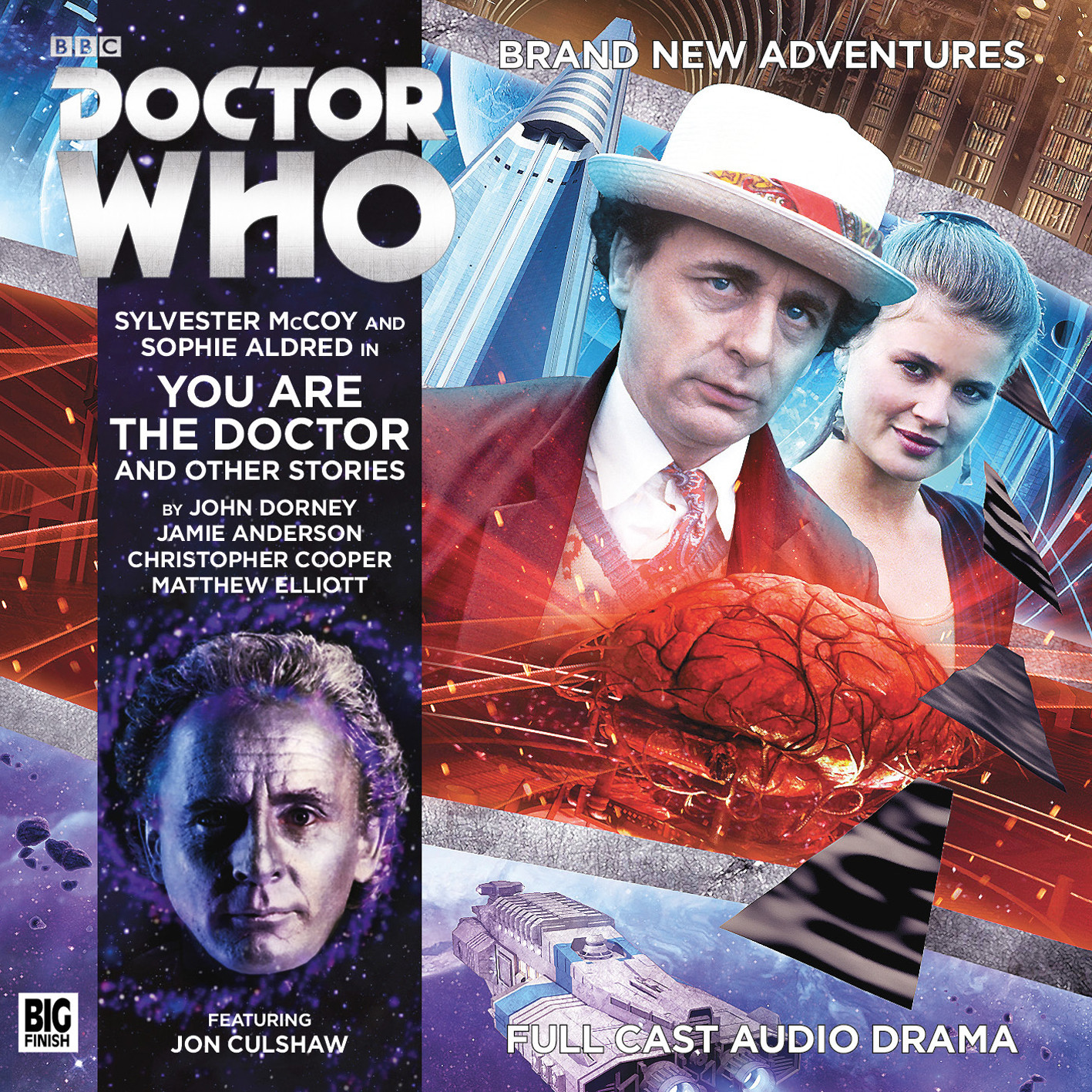
Writer: Jamie AndersonDirector: Ken Bentley
Script Editor: Alan Barnes
Cover Illustration: Joseph Bell
Music & Sound Design: Steve Foxon
Producer: David Richardson
Starring Sylvester McCoy & Sophie Aldred
Released December 2015
Writer: Jamie Anderson
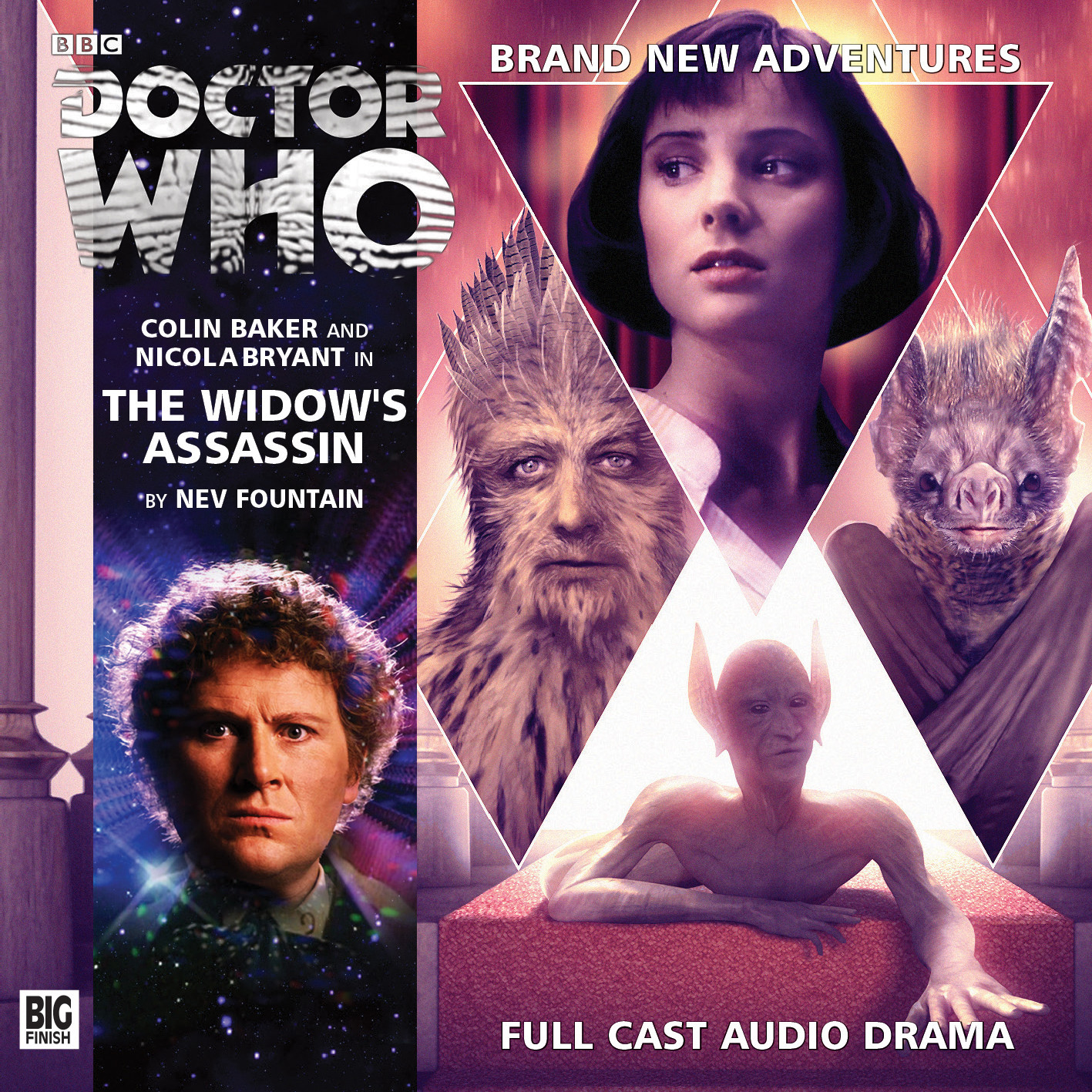
Writer: Nev FountainThe Widow's Assassin sees writer Nev Fountain at his most unpredictable, which is quite achievement. Across its four episodes, the listener is taken on a journey through a fairy tale made flesh, royal court intrigue, battles inside multiple minds and home in time for tea. That this is accomplished with such style is a credit to Fountain and director Ken Bentley.
Following the end of Scavenger, in which the sixth Doctor's latest tagalong Flip (Lisa Greenwood) departed seemingly definitively, he turns up on Krontep in search of reconciliation with Peri (Nicola Bryant), following their own fractious parting. Familiarity with the 1986 Doctor Who TV story Mindwarp benefits the listener a surprisingly great deal when listening to The Widow's Assassin. No sooner has Fountain finally married Peri and King Yrcarnos (Brian Blessed, on TV) than he's done away with him, and this is the catalyst for the rest of the story. Maybe catalyst is the wrong word, as the first episode alone is audacious enough to take place over the course of five years - and then the second goes one better and doubles it.
Setting the story over such a long period allows Fountain to establish and pay off some of the Doctor/Peri relationship work he is famed for. The irony is that, in the end, barely any time at all has passed for Peri, compared to decades for the Doctor. Ordinarily stories that concern themselves with, to paraphrase The Androids of Tara, the affairs of a piffling little planet, hold little interest. But Nev Fountain's colourful universe of characters really makes this story stand out from the crowd. Most notable is Constable Wolsey, Peri's head of security and also half-man/half-sheep. In fact, it is Wolsey who carries the story's first half, narrating events and taking the lead in the second episode. The Doctor's absence here creates a noticeable void, Fountain's writing creating questions in the listener's mind. What he has been up to is more than anyone would expect.
The Widow's Assassin skillfully walks the line between being intelligent and impregnable. Something this high-concept could have made for a difficult listen, especially at its extended length, and especially given it is such a hardcore sequel to Mindwarp. Ken Bentley, the cast and the post-production succeed in making this extremely listenable and realising the script's considerable ambition. The music in particular is to be commended for completing such a rounded production.
As a scene-setter for a new era of travels for Colin Baker and Nicola Bryant, The Widow's Assassin functions perfectly. While it is not a flawless script - the reappearance of the Doctor's first ever foe that comes to nothing is perhaps one subplot too far - the relationship of the Doctor and Peri, characters thirty years in the making is at its core and on this Fountain, Baker and Bryant never put a foot wrong. It is refreshing to have a story as genuinely witty, in writing and execution, as this and it is an absorbing listen, particularly the first two episodes. A triumph for all involved, setting the bar high and leaving the listener hungry for the next story.
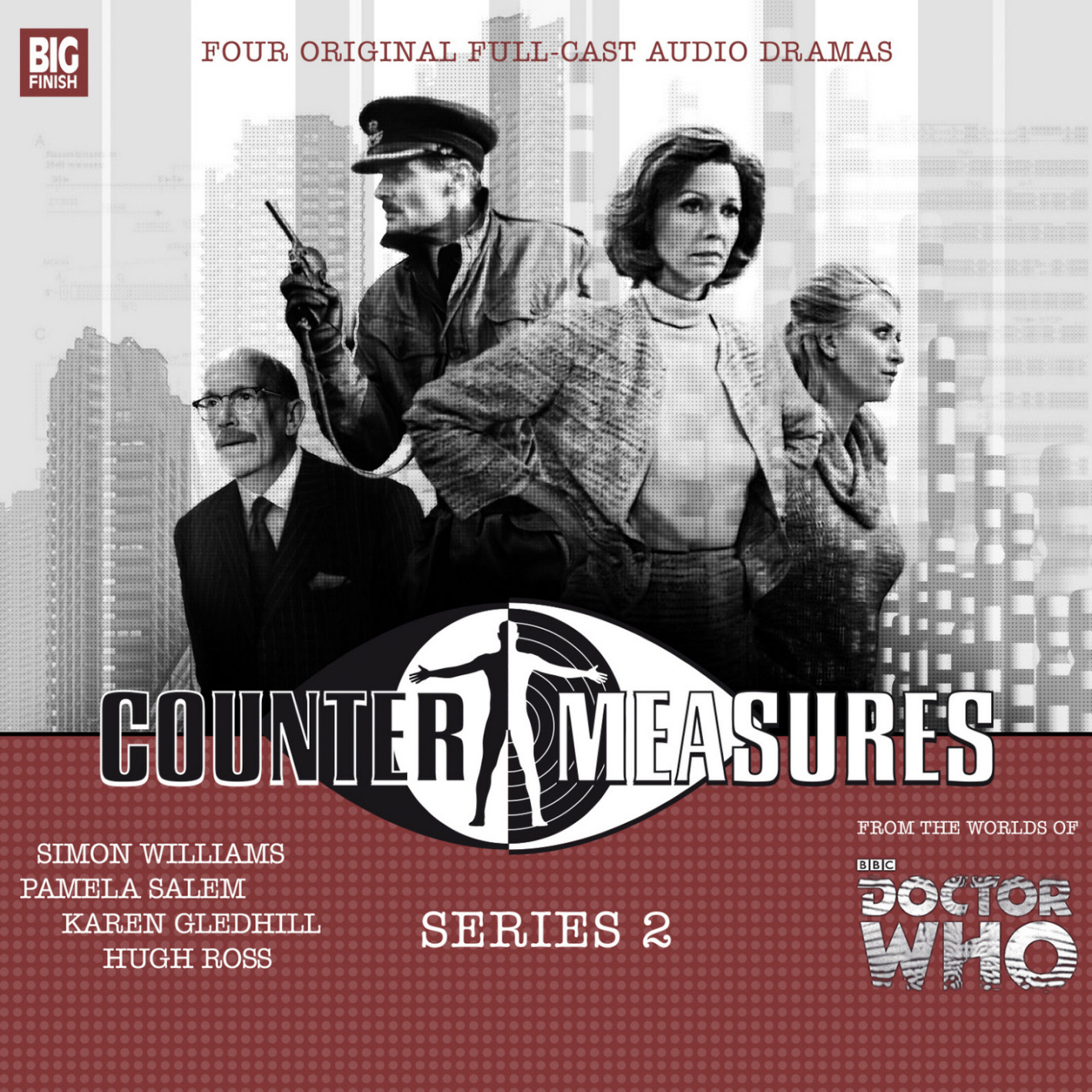
Writer: James GossThe Fifth Citadel is an immediate step up for Counter-Measures. James Goss easily demonstrates how to really make this series work, mixing mystery and horror with real history and hard science and coming up with something much better than that sounds.
As with Ian Potter's script for the first series, The Pelage Project, The Fifth Citadel wastes no time in scoring points through its atmospheric setting and intriguing premise. Counter-Measures can't seem to escape one of the regulars bumping into an old acquaintance each episode but at least here Goss gives Sir Toby some agency in his pursuit of Dr Elizabeth Bradley (Celia Imrie). The story never shies away from the truth of what's in the Underground tunnels, nor what's beneath them. This gives it an edge that lifts it beyond pulpy spy-fi and at times makes for challenging listening.
But the production team and cast never forget themselves and while the awful story of the bunker might take its time unravelling, the episode plays more on the feeling of dread than trawling through the gruesome details. The Fifth Citadel inventively divides the four lead characters in a way that not only gives us unusual combinations but also makes narrative and character sense once the cards are on the table.
This is a story best enjoyed untainted, but safe to say the level of the production values is reliably commendable, particularly in the use of mechanical and metallic noises. In the tunnel scenes, the listener is never in any doubt that life carries on for the rest of London, trains screeching past in the distance (and not-so-distant). Imrie and Hugh Ross as Sir Toby are an electric pairing, and the latter once again turns in the episode's standout performance. But it's also a more dignified entry than the season opener for Pamela Salem (Professor Rachel Jensen), Karen Gledhill (Dr Alison Williams) and Simon Williams (Group Captain Gilmore). Not bad for three characters from a Doctor Who story broadcast in 1988.
Intelligent storytelling at every turn and captivating right to the end, The Fifth Citadel raises the bar for Counter-Measures. It is a great character piece but tackles a situation with potentially disastrous consequences head-on and doesn't pull any punches and somehow also finds time to build on the listener's uneasy impression of Toby's new aide Templeton. A superb, albeit chilling, episode.
Writer: John Dorney
Writer: James Goss
Writer: Matt FittonThe opening episode of Counter-Measures' second series leaves the strong impression that it will basically be more of the same, no reinventing the wheel. But that's OK because wheels are fine as they are, and so too is Counter-Measures. This series of sixties-based adventure that's as much spy-fi as sci-fi fielded a promising first box set and Matt Fitton's Manhunt continues resolutely in that vein.
One of the most refreshing things about Counter-Measures is its lack of reliance on extraterrestrial incursion. This could easily have simply been a precursor to UNIT but science is usually placed at the heart of the story, some secret experiment or project uncovered when it goes wrong. In this respect, Manhunt is no different.
The story begins with Group Captain Ian Gilmore on the run, wanted for murder. He is of course innocent, which makes waiting for everyone else to catch up a little tedious. But there's intrigue at the centre of this conspiracy and although the twist concerning two characters is genuinely unexpected, it's also, to put it politely, complete bobbins. Even for a series based in the orbit of Doctor Who, Fitton's use of science stretches credibility and he gets away with it pretty much by having laboratory boffins Professor Rachel Jensen, also the boss of Counter-Measures, and Dr Alison Williams reason that it must be possible because it's happening in front of them.
With the villain riding off into the sunset, it seems like round two is in the offing, and given the title of the series finale is Sins of the Fathers, there may not be too long to wait.
On the production side, this is nearly immaculate. Ken Bentley's talented cast ably race through the material, even if it sometimes becomes a challenge to distinguish the three RP ladies. Particular praise to Hugh Ross, reliably excellent as the slippery Sir Toby, Big Finish's only original addition to the series' line-up. The sound design is faultless throughout but the music once again throws up a few issues. The theme tune revamp did not fall on grateful ears; it was already a racket and the last thing it needed was even more going on. Likewise, some of the incidental music that errs closer to sounding like Nick Briggs falling asleep at his synthesizer breaks the illusion Bentley creates, interrupting and overwhelming dialogue. On the whole, the pieces containing just a couple of instruments work well but the cacophony of flutes, pianos, drums and goodness knows what else really make it seem like Big Finish are sending up the sixties rather than trying to evoke them.
On balance this is a vanilla episode to ease the listener back into Counter-Measures, exactly on par with Fitton's contribution to the first series. Hopefully the remaining three episodes will push the boat out a bit more, but as a benchmark, the series could do worse.